


Tatyana Alexandrovna Pechetegina,
life and work
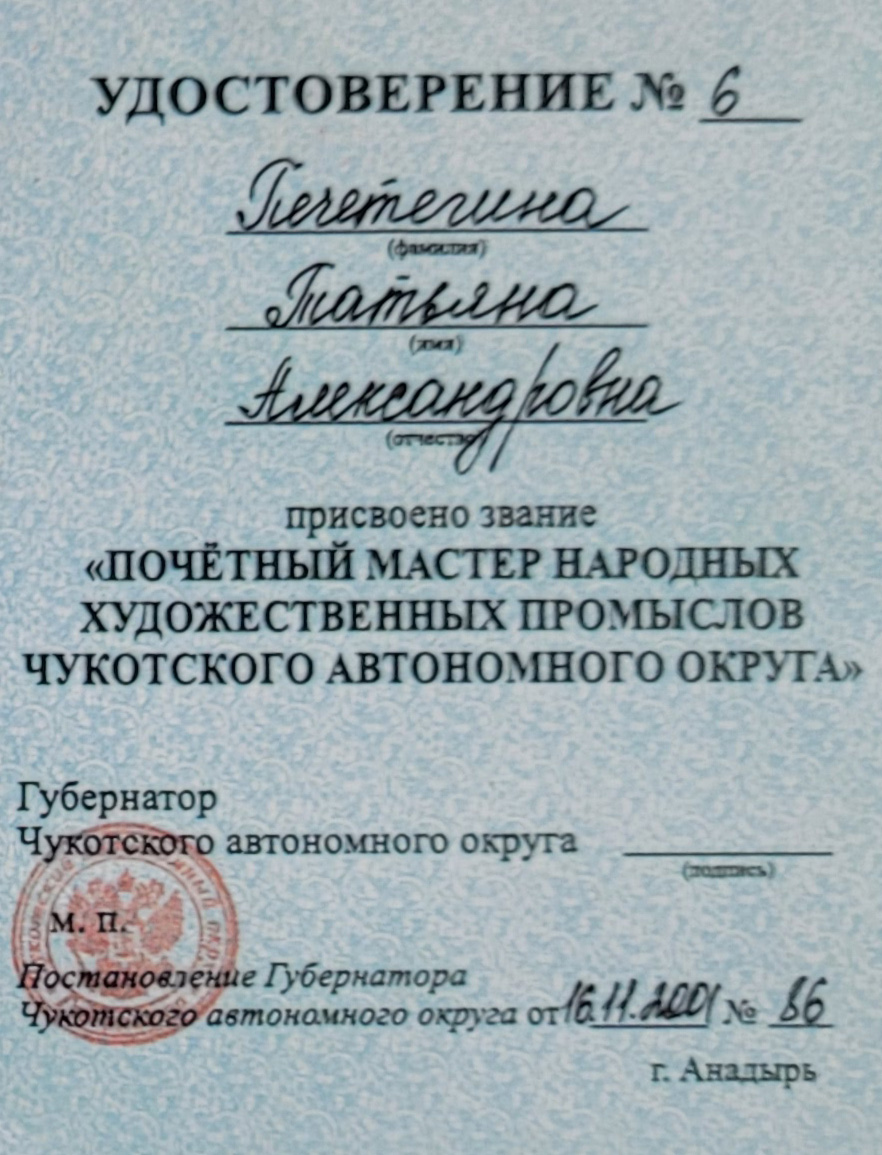
Tatyana Alexandrovna Pechetegina – master engraver, holds the titles of "Honorary Master of Folk Arts and Crafts of the Chukotka Autonomous Okrug", "Keeper of the traditions of the ChAO", "Honorary Citizen of the ChAO". She has been engaged in engraving on walrus tusk since childhood, her works are represented in many museums around the world, are kept in stock collections in Moscow, St. Petersburg, Chukotka. Favorite subjects are fairy tales, myths, legends and stories about the life of ancestors. In her bizarre drawings, Tatyana Alexandrovna managed to combine both ancient legends and modern life.
Biography
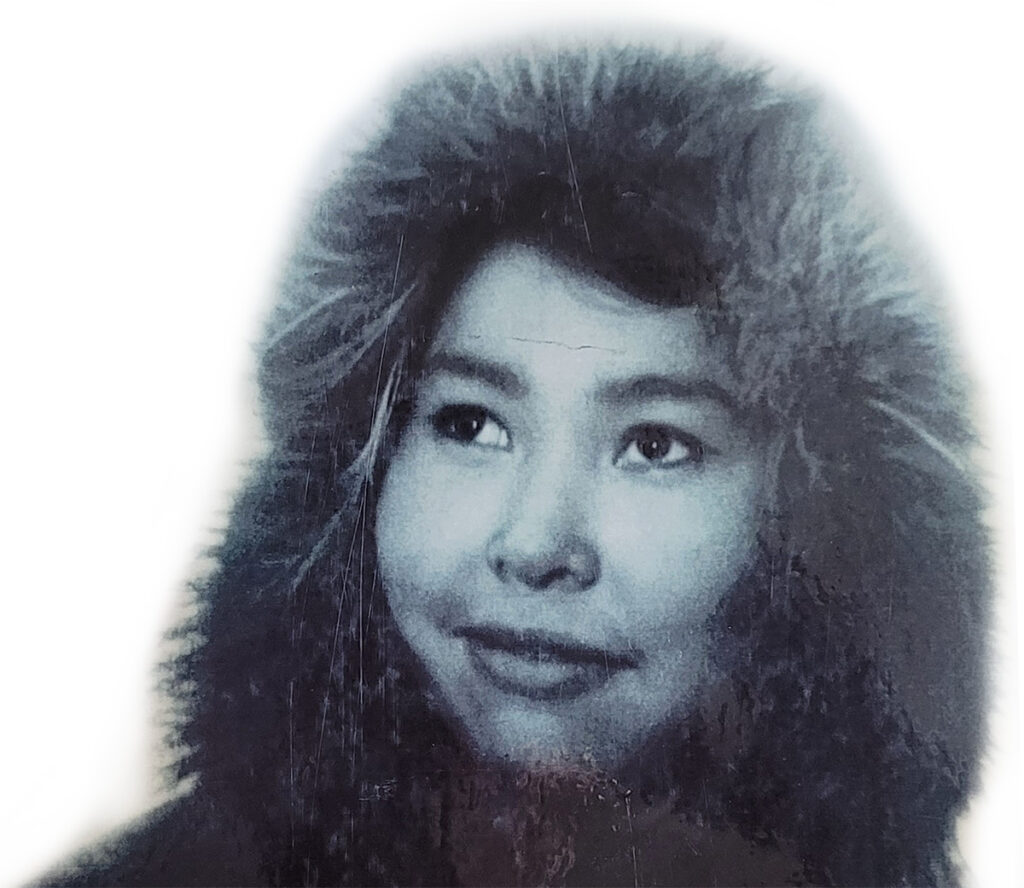
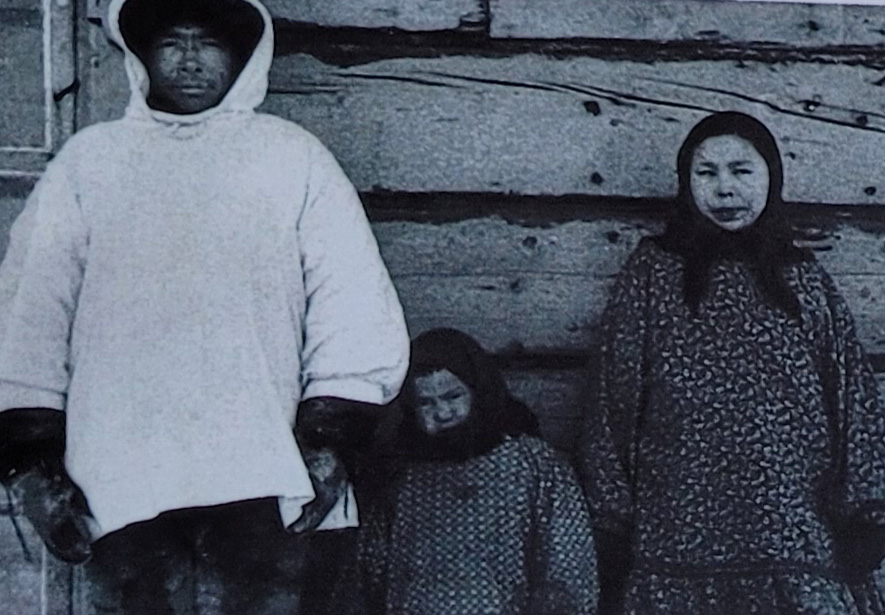
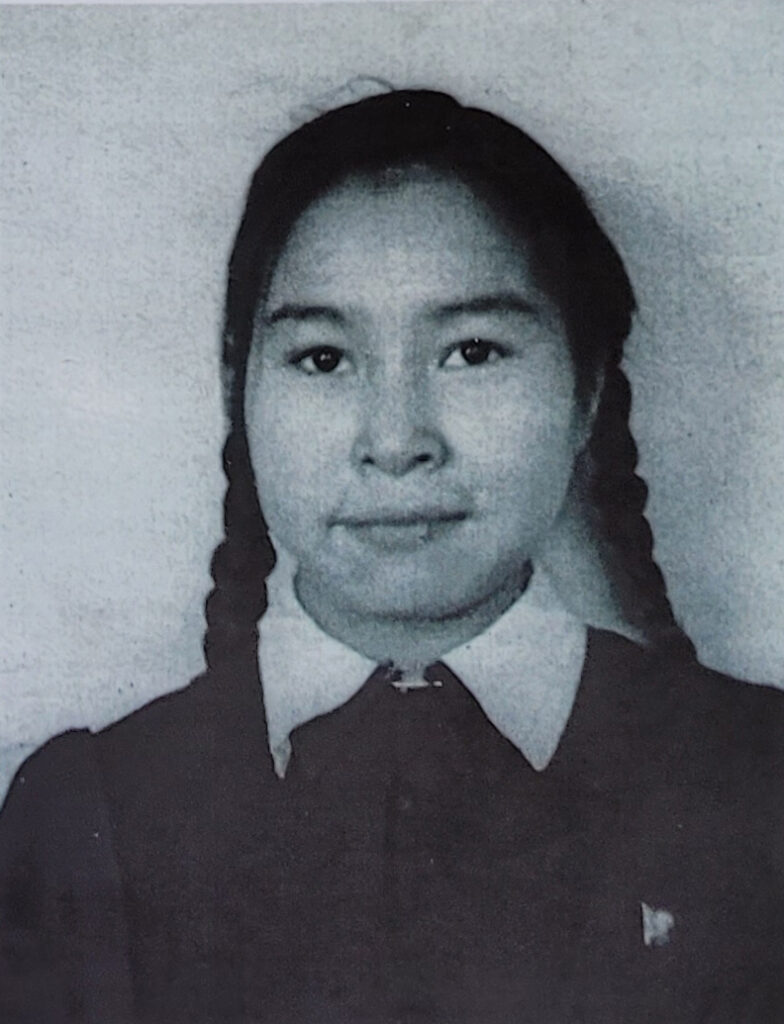
Tatyana Alexandrovna – the ninth child in the Pechetegin family, was born in 1948 on the longest night of the year on December 22, Uelen. The name was given by a Russian and named Tanya by a paramedic-obstetrician Margarita Marukhno, who delivered Amak. In order for the evil spirits not to find out about the birth of a child in the Pechetegin family, all relatives and residents of Uelen considered her the daughter of Margarita Marukhno and everyone called her not Tanya, but by the surname Marukhno.
Such caution was due to the fact that the sons born before her died of diseases or accidents. So, until she came of age, the name Marukhno was assigned to her. The parents feared for the little girl's life and never said Tanya's name out loud. She spent his childhood in yaranga – lygarek. Her parents and older sister protected her in every possible way and loved her very much. The older sister was watching her younger sister Tanya.
For little Tanya, the toys were colored pebbles collected on the seashore, small figures made of walrus tusk made by Uncle Gemauge. There are still children's sledges – k^enret with walrus tusk runners, which her father made.
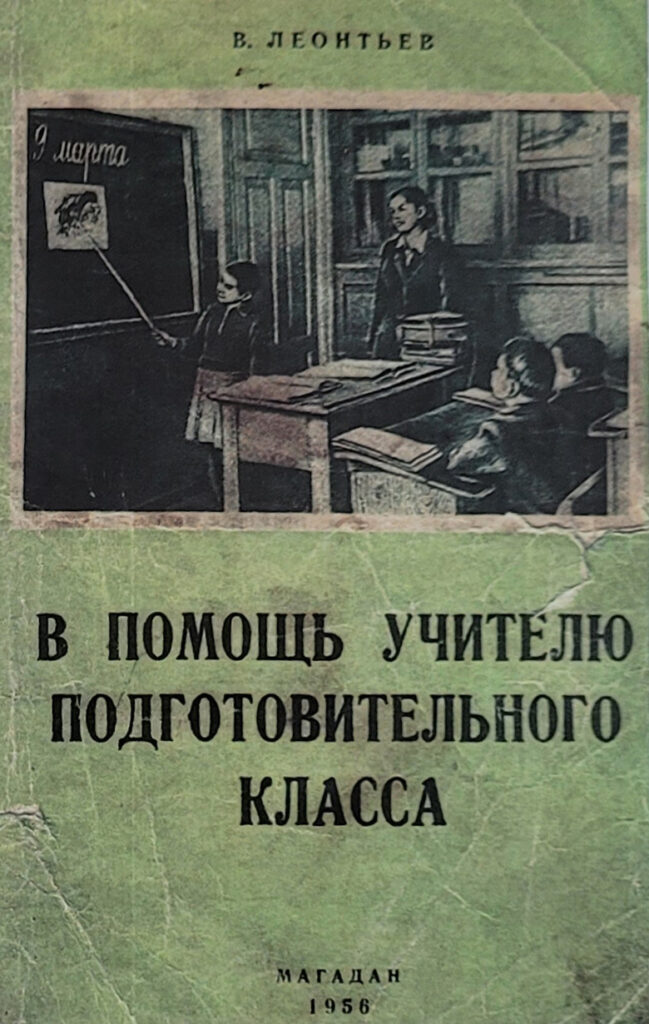
In 1956, Tatiana went to school in a preparatory class, completely unaware of the Russian language. She remembers with special warmth his first teacher Tamara Alexandrovna Shikunova, who herself learned the Chukchi language and taught it. She taught Tanya Russian literacy, mathematics, and writing. At the same time, Vladilen Vyacheslavovich Leontiev worked at the Uelensky seven-year school. He and T.A. Shikunova published a methodological guide 'To help the teacher of the preparatory class' from the work experience of teacher T.A. Shikunova in the preparatory class of the Uelensky seven-year school, which was published in 1956.
The teachers were: Amak, the cousin, Ivan Vasiliyevich Achivantin; the daughter of hunter Unpener, Pechetegin's niece, Margarita Ivanovna Rykvatkot, an excellent student of public education in schools of the Russian SFSR, had a government award, the Order of Lenin. Her teaching experience is 24 years.
Tanya grew up a very curious child and a good listener, and most importantly, she remembered everything and could tell, and if something was not clear, she asked again. Apparently, noticing these qualities in the child, the parents began to tell her about everything they remembered from their previous lives, about the pedigree of their father and mother, fairy tales, legends, incidents from life and sea hunting, humming melodies to small playful fairy tales.
Studying was difficult. She had to get used to the Russian language, to get used to school life, to the demands that teachers made. Her favorite subjects were literature, Russian, history, singing, and drawing. Mathematics seemed to Tanya to be the most difficult of all disciplines. During her studies, she developed such qualities as willpower, accuracy, discipline, and ability to finish any task. At the same time, Tanya was a sociable, cheerful, kind child. She loved to visit her numerous relatives and listen to their stories there. When she came home, she retold what she had heard, and asked her parents, 'Is it true that it really happened?' Grandmother K'ek'k'en’ (К’эк’к’эн’) Amak's mother, also contributed to Tanya's granddaughter's upbringing.
She told fairy tales, legends, about the peoples living in other areas, about her ancestry. Absorbing everything she had heard and seen, Tatiana decided for herself that after school she would definitely go to work at the Uelen bone-cutting workshop. When she entered the workshop, she saw Vera Emakul and Galina Tynatval depict everything they know and see on walrus tusks. Tanya looked at their work and thought how beautifully they turned out, you can read a fairy tale, legend or story from a drawing, see how you used to live.
Her parents played a big role in the development of artistic skills, especially her father, who discovered for Tanya an amazing sometimes cruel life of survival in harsh northern conditions, but at the same time love, kindness, and respect for her ancestors. He wanted all descendants to be worthy of their ancestors. All this has been laid down since childhood.
In the long winter evenings, her father talked about hunting. He talked about sea animals, their habits, described in detail what marine and tundra animals, birds look like, about traditional holidays, rituals, and competitions between villages. I knew many cases that occurred during hunting with hunters, and how one-on-one in the cold sea, sea hunters survived in the struggle with nature for life and returned home with their prey. After all, there will be no family without a male breadwinner. Mama Amak colorfully and consistently described all the important events of her kind and conveyed an understanding of the world around her.
The deepest folk memory of the ancient times was passed down orally from generation to generation in the Pechetegin family and reached the children of Tatiana Alexandrovna.
After graduating from the Uelen school, Tanya entered a bone-cutting workshop as an apprentice. She chose a painting technique, that is, engraving on a walrus tusk. The mentor was Galina Andreevna Tynatval (a relative on the Amak line), the daughter of the famous bone carver Vukvutagin, who was awarded the Order of Lenin for his contribution to the development of bone carving. The main artist of the workshop was Tukkai, he is the cousin of Amak's mother Tatiana. Tukkai also had the Order of Lenin. At that time, this was the highest state award, it was awarded only to the best employees. In 1966, famous carvers and engravers worked next to a young, beautiful and not yet experienced girl: Vera Emkul, Elena Yanku, Khukhutan, Gemauge, Tatro Grigory, Chuplyu, Naus, Kililoy, Ivan Seigutegin, Lev Nikitin, Gemauge Maya. But until the very end, Galina Andreevna Tynatval was Tatiana's teacher. She is eternally grateful to her. Galina Andreevna Tynatval is an Honored Artist of the Russian Federation, winner of the I.E. Repin Prize, studied with Vera Emkul, worked in the Uelensk bone–cutting workshop from 1945 to the 1990s. The works are in the Russian Ethnographic Museum, the Moscow State Museum of Fine Arts, the Sergiev Posad State Historical and Art Museum-Reserve, the Magadan Regional Museum of Local Lore, the museum center Heritage of Chukotka, the Museum of the UKM.
On April 22, 1970, Tatiana Pechetegina published her memoirs in the newspaper Sovetskaya Chukotka entitled 'Life should be beautiful'. She writes,... For the first time I crossed the threshold of a bone cutter when I was still a schoolgirl. I was fascinated by the works of Emkul, Tynatval, and Yanku. I wanted to become an engraver. I remember coming home, taking a piece of paper and a pencil and starting to draw. The drawings turned out to be ugly, but I took them to Galya Tynatval, who became my first teacher. She patiently corrected them, advised them which plots were better, and how to build a composition. After I was 8 years old, I came to the workshop to work. Things were moving slowly, but I was so caught up in them that I couldn't think of anything else. And this year, my work is among the best works of the oldest master engravers, whose works have been awarded diplomas at many domestic and international exhibitions, and it got to Expo-70, an international exhibition in Japan.
During my time in the workshop, I painted a lot of fangs. I took the plots from folk tales, but I especially like to depict hunting scenes, from the life and everyday life of reindeer herders, from folk festivals. All this is understandable and close to both my countrymen and other people whom we serve with our art.
I am happy that I work with many renowned artists, whose products are known far beyond the borders of the district and even the country, because with my humble work I bring joy to people, help them see the beauty in life, nature, work, and show them the surrounding reality through the prism of my artistic perception. After all, the main purpose of the artist, in my opinion, is to reveal to people the beauty of the land on which a person lives, the greatness and heroism of labor.….

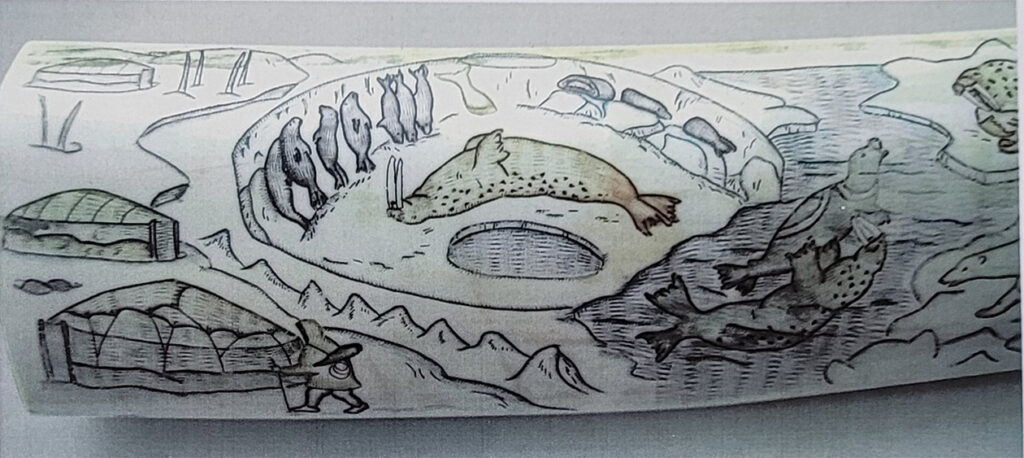
T. Pechetegina, "The Magic Tambourine" - a fairy tale, 1986. UKM Museum named after Vukvola, 2007
Creative activity
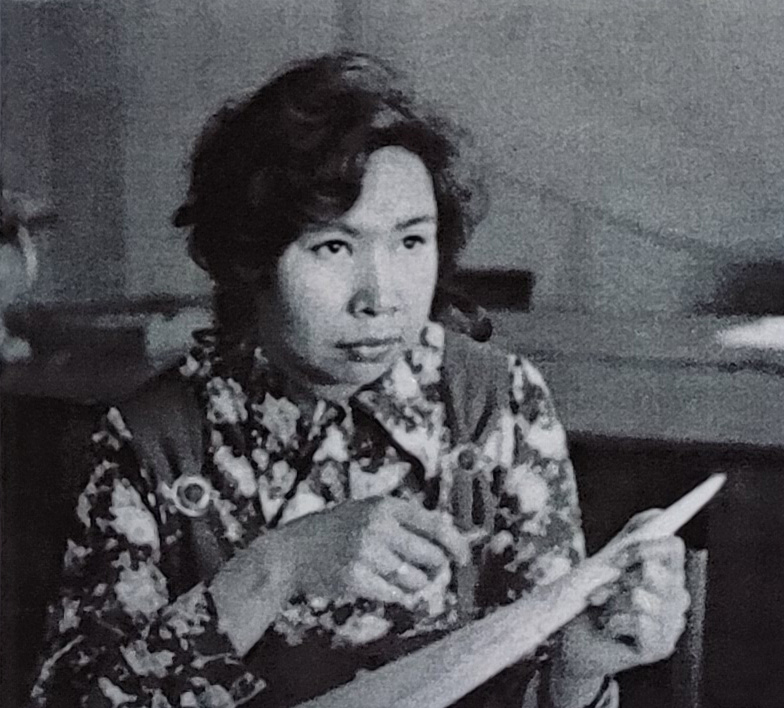
T. Pechetegina in UKM, 1974.

T. Pechetegina in the new UKM building, 1977.
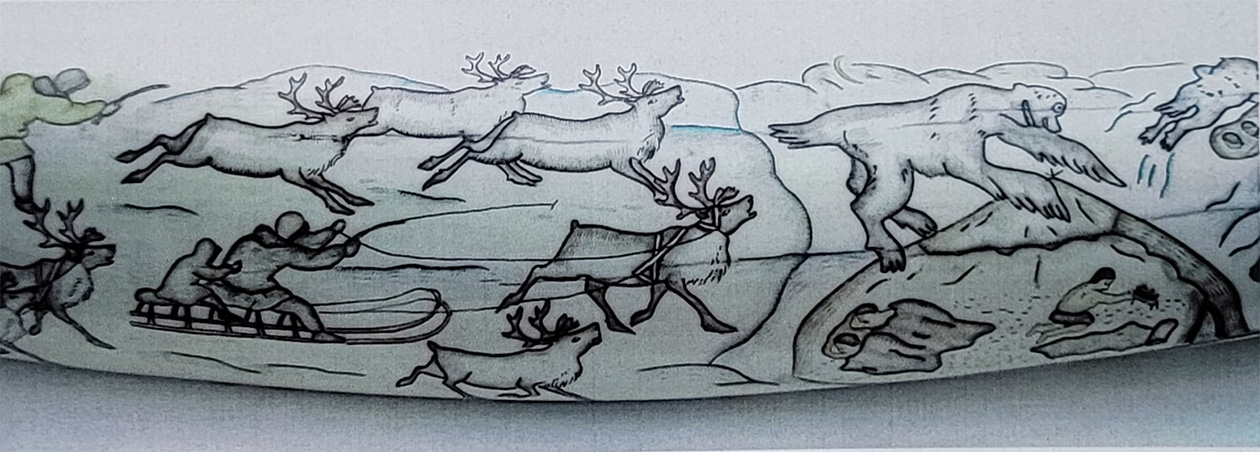
Fragment of the fang "The Returned Life" is a fairy tale. 1978.
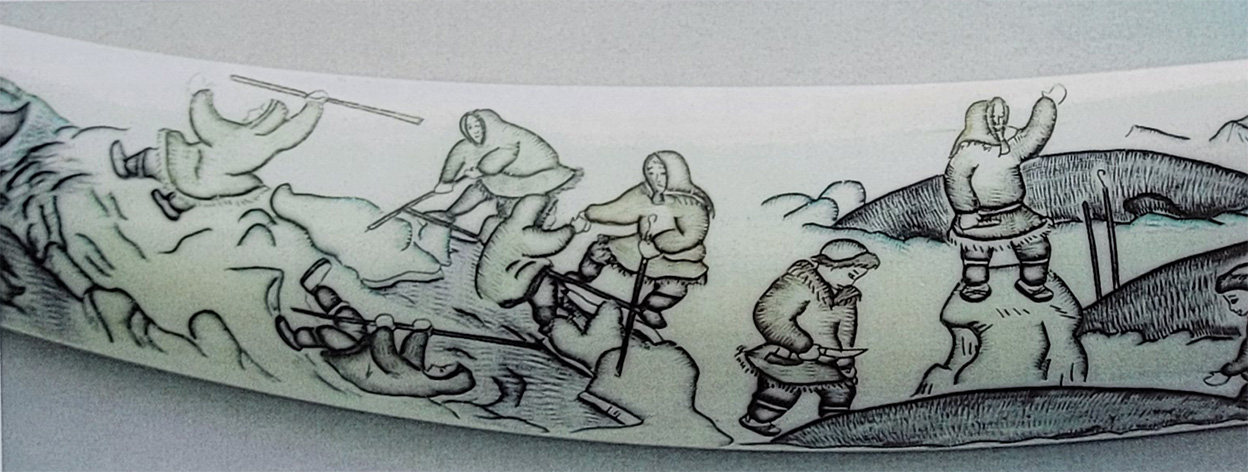
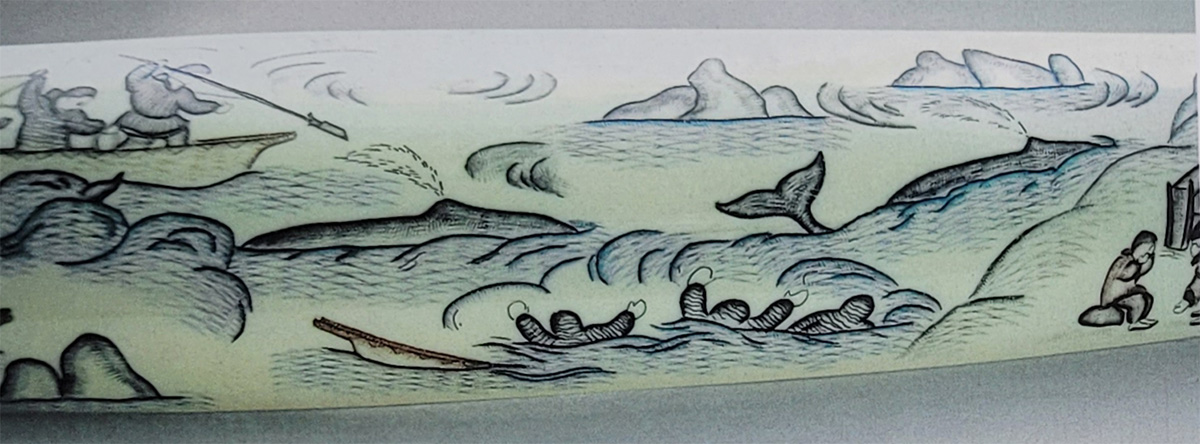
Engraved fang, fragment "Bowhead whale hunting", 1983.
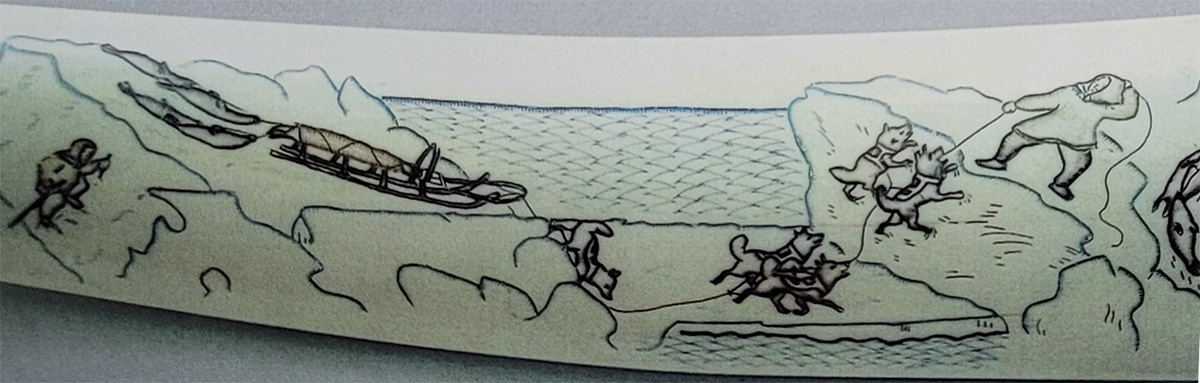
Fragment of a fang "The case of my father on the hunt", 1983.
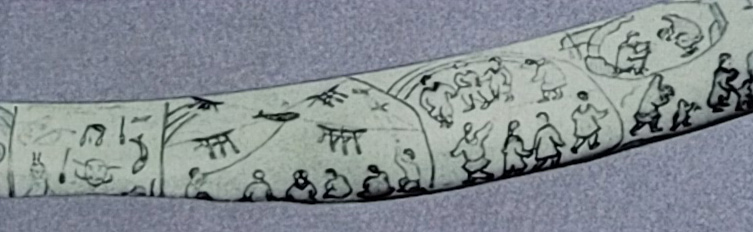
Fang, fragment of the "Chukchi festive rite", 1980, Uelen
Tatiana was a good student, and after three months she rose one step higher, becoming an engraver. The first work that brought fame to Tanya was the fairy tale 'The Good Seagull'. The work took part in an exhibition in Japan in Osaka in 1970. She received her first medal at the age of 22. Her parents were very pleased with the results of her work and helped her in every possible way. This is where the creative work begins, there are about 120 of them. He has been a member of the Union of Artists since 1973. In 1974, she was elected chairman of the department of the Union of Artists of the Uelensk Bone–cutting Workshop, and in 1977, a member of the board of the Magadan regional branch of the Union of Artists of the Russian SFSR. In 1987, she participated in the All-Russian Sixth Congress of Artists. Since 1990, he has been a member of the Revision Commission of the Union of Artists of the RSFSR.
In 1970, on May 26, the next issue of the newspaper Sovetskaya Chukotka was published. There is a small article in this newspaper called 'The Pattern on the bone'. And this is what the author told us, 'It can always be different, but it always conveys the soul of the people, the national features of their culture and art.
The name of Tanya Pechetegina, the youngest of the master engravers of the Uelensky bone-cutting workshop "Northern Souvenir", has recently been increasingly called next to the names of famous engravers and bone-cutters of Chukotka.
Her passion for art manifests itself in other ways. Tanya is an artist of the Uelen amateur art ensemble. She tries not only to dance on stage, but also to help the head of the club, Vitaly Taskaev, organize interesting evenings, funny and witty KVN (club of humor).
As a Komsomol member, Tatiana Pechetegina spends a lot of time working among rural women. She was assigned by the Women's Council to monitor the sanitary culture of the Uelens' homes.… Parents whose children are in kindergarten have elected her as a member of their committee. As an active social activist, the women of the village sent her as their delegate to the third Congress of Women of Chukotka, which was held in Anadyr on April 8-9. Here, among others, she was awarded a Certificate of Honor from the district committee of the party, the district executive committee, the district committee of the trade union and the district committee of the Komsomol.…
Tanya was a member of the Komsomol committee, headed the cultural and mass sector. Now she is the secretary of the Komsomol organization, the leader of all Uelen youth. And this role is quite up to her, because Tanya has no business to which she has not devoted herself wholeheartedly'.
Creative works based on his father's stories were made on the themes of sea hunting, fairy tales and legends:
- Kegluchin (Кеглючин) – a lone walrus,
- Hunters meeting with a polar bear,
- Hunter and Killer Whales – legend,
- Bowhead Whale Hunting,
- The case of my father hunting at cusp Senlyukvin,
- Luck with Yivit,
- The Returned Life – a fairy tale,
- Little Tylyk' - a fairy tale,
- Hunter and Killer Whales – legend,
- The Magic Tambourine – a fairy tale,
- "The Lost Song" – a fairy tale,
- "How an orphan created the sun, stars and moon" – a fairy tale.
According to Pechetegin's story, an incident that happened to him during a hunt is painted on the fang. The main idea of the story is how to act at a dangerous moment, when there is only the open sea around and there is no escape, everything depends only on you, your knowledge, the ability to control the situation and not to panic, to have strength and endurance.
A large creative work based on her dad's story is called "Luck with Yitiv" (Yitiv is the Grendlan whale). This canine shows Pechetegin's older brothers hunting bowhead whales in early winter. My father was directly involved in the depiction of hunting scenes, because he saw everything with his own eyes. He drew a sketch of a floating sea giant, harpoons, as the brothers acted during the hunt.
Another art work is devoted (a continuation of the above-mentioned work) to the traditional ritual ceremony at that time in honor of the soul of the captured bowhead whale. The work is called the 'Chukchi festive rite'. My father drew a sketch of an ancient dwelling – K'legrand, according to his memoirs, its internal structure with detailed explanations of all the details of the structure. Amak's mother told her what kind of clothes they wore, what kind of jewelry the women had, specially made for the holiday. What kind of sports competitions were held between men. National dances were obligatory at the festival. Pechetegin spoke with admiration about Vykvylk'ote when he went out to perform a dance. He danced in a mask decorated with a mustache made of herbs, in beautiful elbow–length gloves and raincoat - Ukkenchi. This work participated as a poster presentation at the international scientific and practical conference "Days of Beringia" in Anadyr, 2007.
Fragment of the fang "Luck with Yitiv", 1985, Museum of the UKM named after Vukvol, 2007.
Pedagogical work

Since 1995, Tatiana Alexandrovna has been working at the Uelen secondary boarding school. She graduated from the Anadyr Pedagogical College in 1997. For nine years, Tatiana Alexandrovna worked at the school as a teacher of additional education, taught the history of the culture of the peoples of Chukotka, was in charge of the school's museum of local lore and led a local history circle. During her time at the Uelen bone-cutting workshop, Tatiana Alexandrovna has accumulated a huge amount of knowledge about the culture, traditions, and customs of her people. Therefore, the lessons, meetings, and events conducted by Tatiana Alexandrovna were interesting, informative, and carried the deepest research material for children. She gave lectures to villagers, border guards, and employees of the polar station.
Active community service
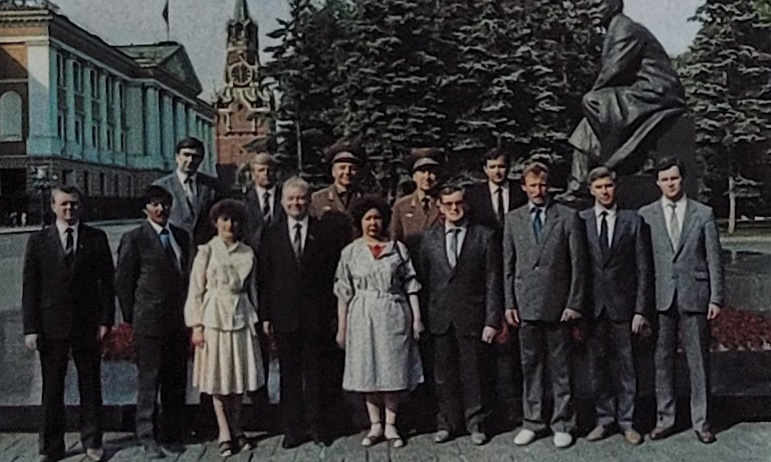
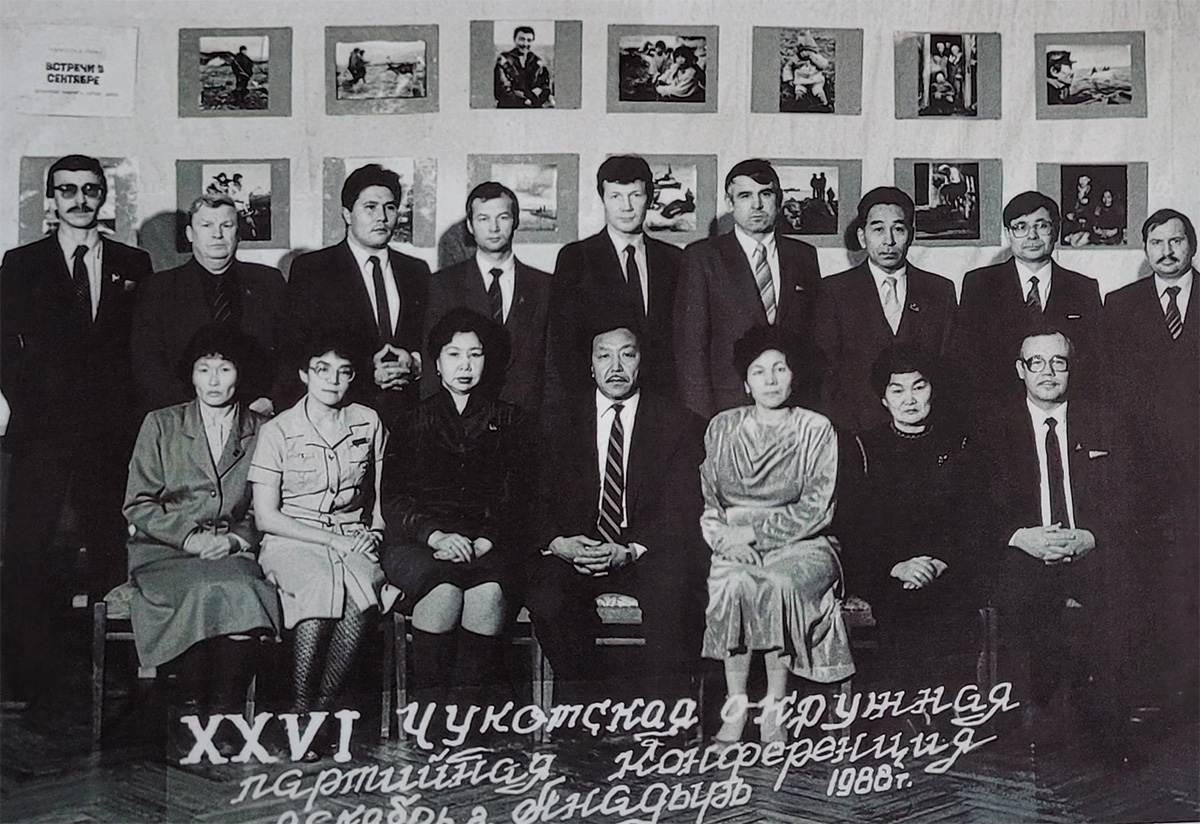
On June 19, 1988, the Magadanskaya Pravda newspaper published an interview with correspondent O.Nasonova with T.A. Pechetegina entitled 'The Right to Identity'. There is a small reference in the interview where it says:
'... The professional development of the young artist was combined with growth of her social activity. In 1971, she joined the party. Today she is the deputy secretary of the workshop's party organization, chairman of the Village Women's Council, and a board member of the Magadan branch of the Union of Artists. A year ago, Tatiana Alexandrovna became a delegate to the sixth Congress of Artists. Over the past years, visitors to museums in Anadyr, Magadan, Khabarovsk, Moscow, and Leningrad have become familiar with her works, and they have been featured in exhibitions in Japan, Germany, the GDR, Hungary, France, and Cuba."
Tatiana Alexandrovna has always taken an active life position. She was not indifferent to the troubles of the people. She was elected a delegate to many district and regional party conferences. The voice of truth is heard from all the stands. She often appeared on television and radio with interviews about the life of Uelen village and its inhabitants. And today, Tatiana Alexandrovna holds the position of chairman of the Council of Uelen elders, meetings solve the problems of hunters, quality of imported products, and supply of medicines to the hospital. When coming to Anadyr, first of all he meets with representatives of the authorities, solves a variety of problems.
"Dance of friendship of peoples". The Uelen Ensemble, 1973, walrus tusk, engraving.
Exhibitions
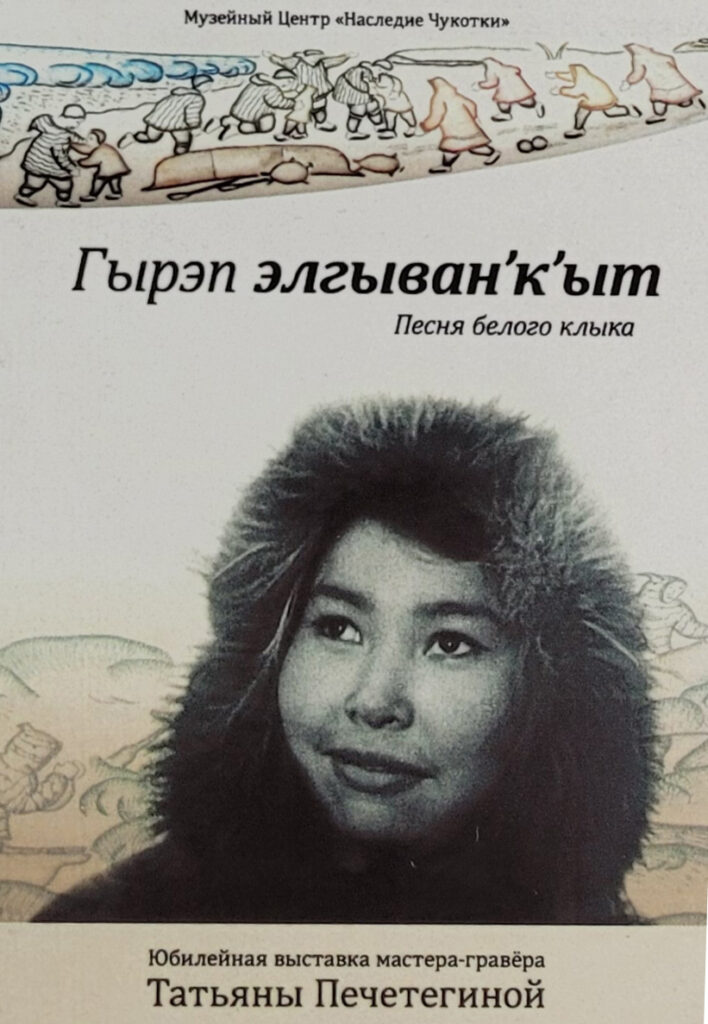
Russian exhibitions by Tatiana Alexandrovna Pechetegina
- Regional exhibition "Masters from Uelen", Anadyr, 1969.
- Regional art exhibition "Bone-cutting art of Chukotka", Magadan, 1970.
- Zonal art exhibition "Chukchi-Eskimo art of Chukotka", Khabarovsk, 1972.
- Zonal art exhibition "The Soviet Far East", Vladivostok, 1976.
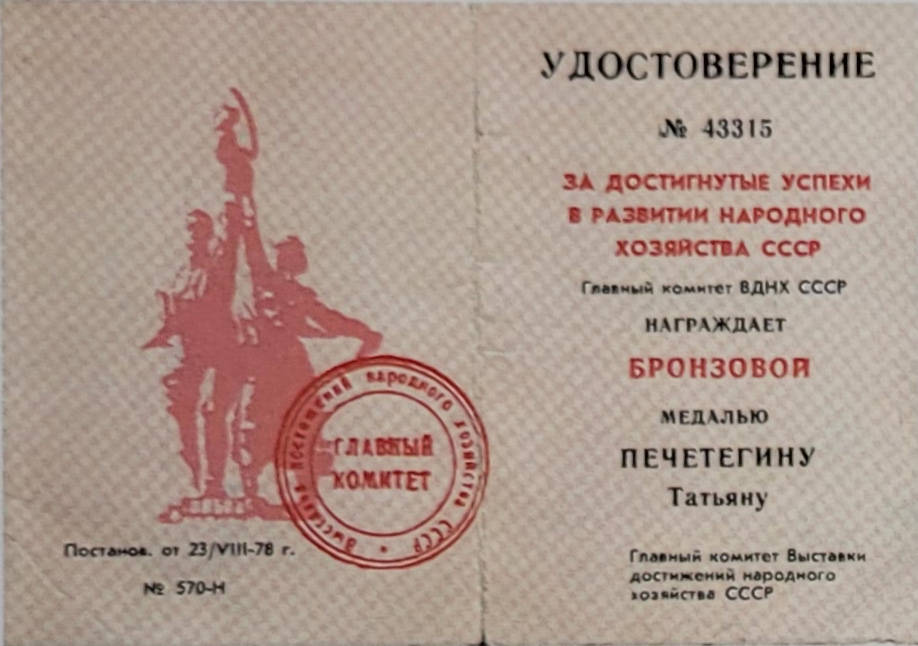
- International Exhibition "Art of the Peoples of Chukotka", Moscow, 1978. VDNKh.
- Zonal exhibition "Folk art crafts", Khabarovsk, 1979.
- Regional Art Exhibition "Art of Chukotka", Magadan, 1980.
- International exhibition "Decorative and Applied Art, bone-cutting art", Moscow, 1980.
- Regional exhibition "Radiance of the North", Anadyr, 1985.
- International Exhibition "Inrybprom-90", Leningrad, 1990.
- Solo exhibition "Gyrep elgivan'k'yt" (Гырэп элгыван’к’ыт) (Song of the White Fang), Anadyr, 2008.
Foreign Exhibitions of Tatiana Alexandrovna Pechetegin
- Япония (Осака), 1970г.
- Budapest (Hungary), 1976.
- Cuba, 1978.
- Bucharest (Romania), 1979.
- GDR, 1983.
- Switzerland, 1990.
- International exhibition in Switzerland "United North: an exhibition of works of art by Arctic residents", 2005.
Awards
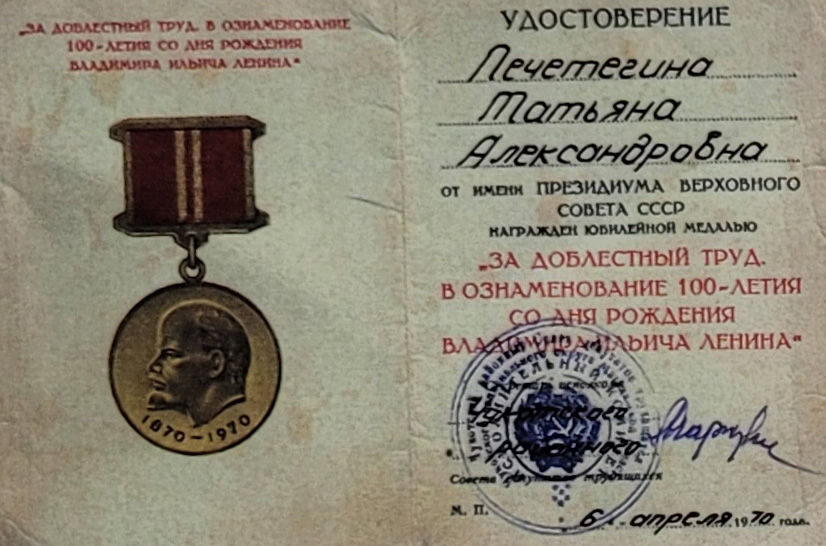
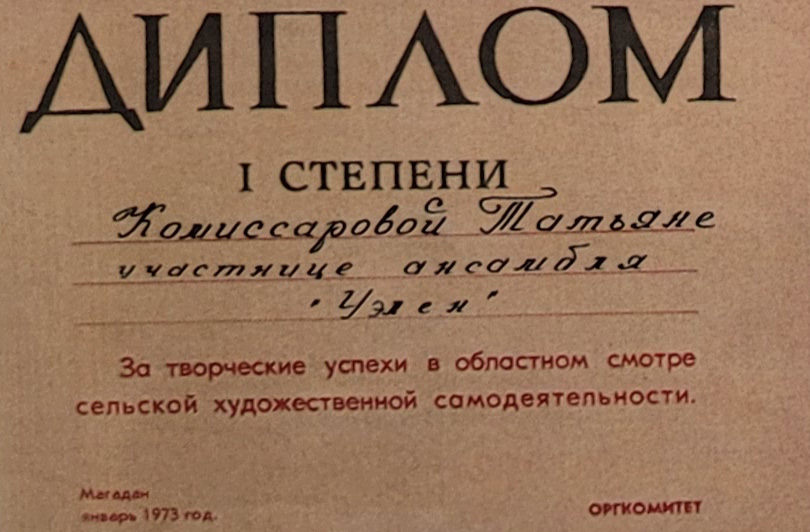
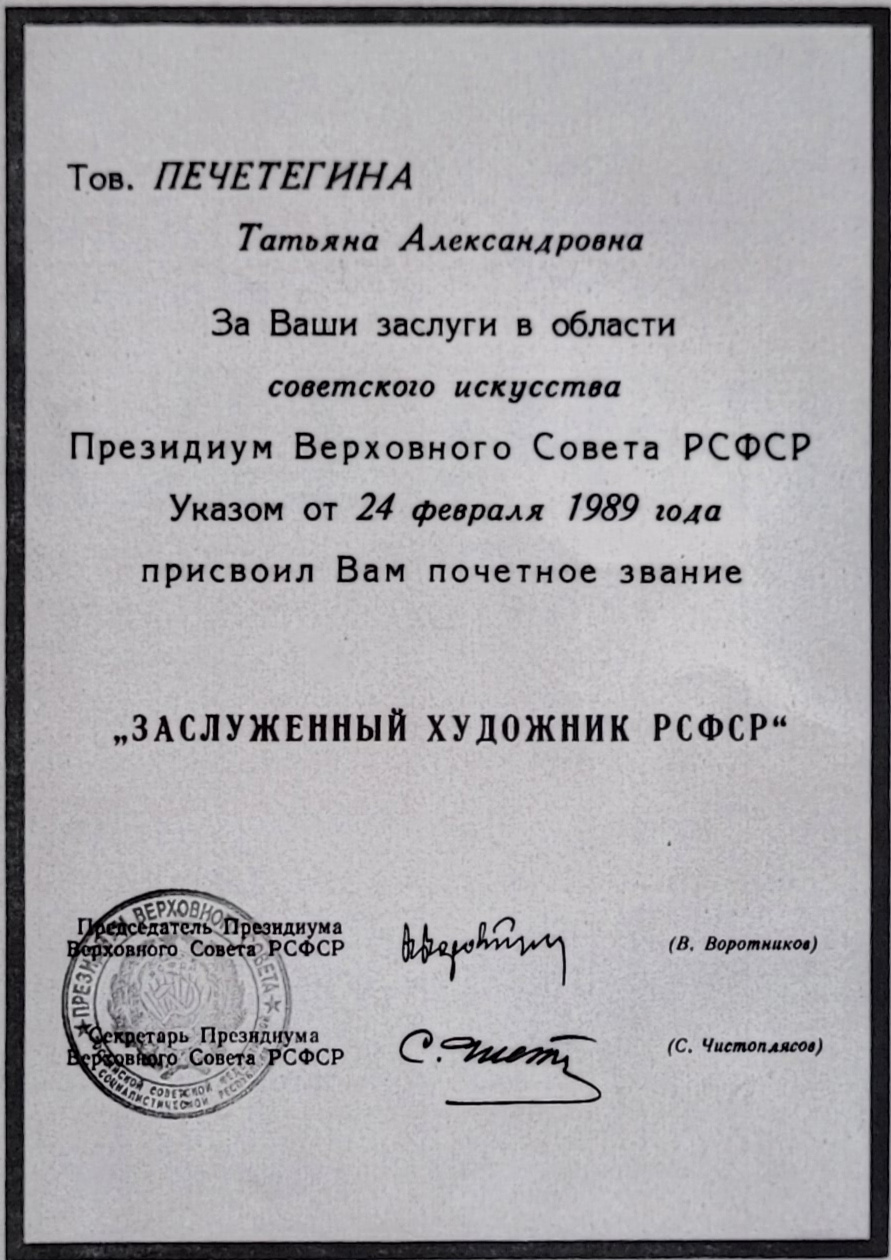
There is a government telegram: “The Board of the Ministry of Local Industry of the RSFSR cordially congratulates you on being awarded the honorary title of Honored Artist of the RSFSR. We wish you good health, happiness, further success in your creative work, and the development of the national art of Chukotka.
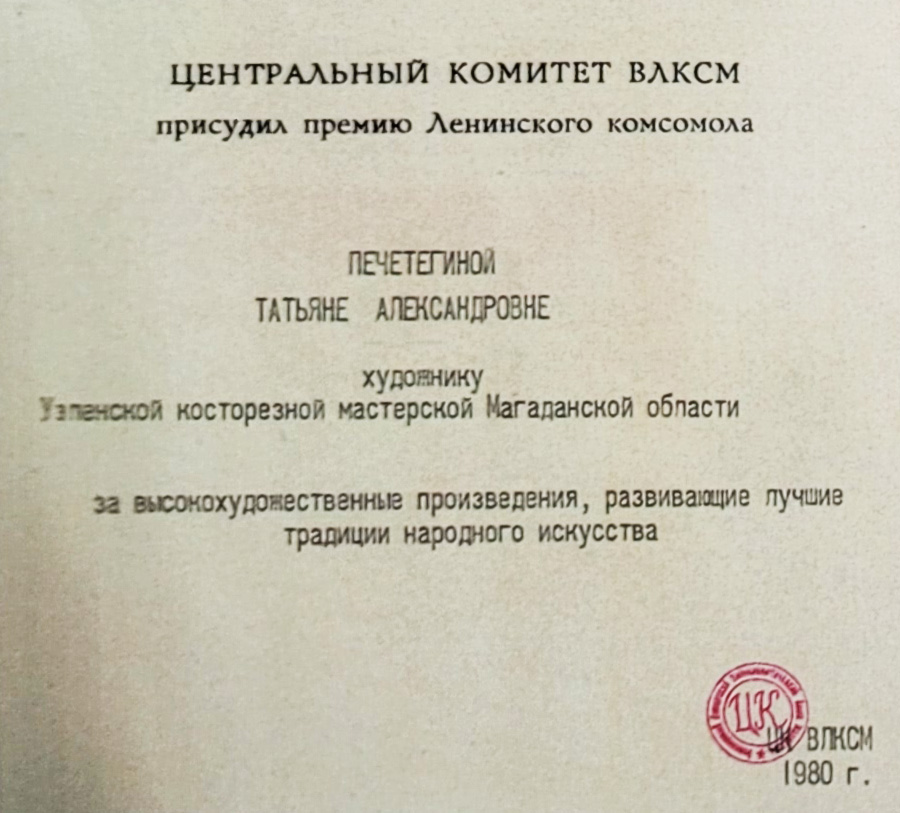
Diploma of the second degree. Tatiana Pechetegina, artist of the Uelen bone-cutting workshop "Northern Souvenirs" named after Chairman of the Department of Local Industry of the Magadan Regional Executive Committee is awarded this Diploma for her participation in the All-Russian exhibition and exhibition of folk art crafts 1977-1978. The decision of the Organizing Committee of the Exhibition dated July 23, 1980 No. 12. Chairman of the Organizing Committee, Deputy Minister of Local Industry of the RSFSR B.V. Sorokin.
The honorary diploma of the Ministry of Local Industry of the RSFSR had awarded Comrade Tatiana Pechetegina, engraver at the Uelen workshop "Northern Souvenirs" for the creation of highly artistic folk art crafts in 1985. Order of the Minister of Local Industry of the RSFSR dated October 24, 1986, No. 380, Moscow, Minister A.G. Shumeyko.
19 honorary certificates.
Fragment of a fang "Little Tail" - a fairy tale, 1985.
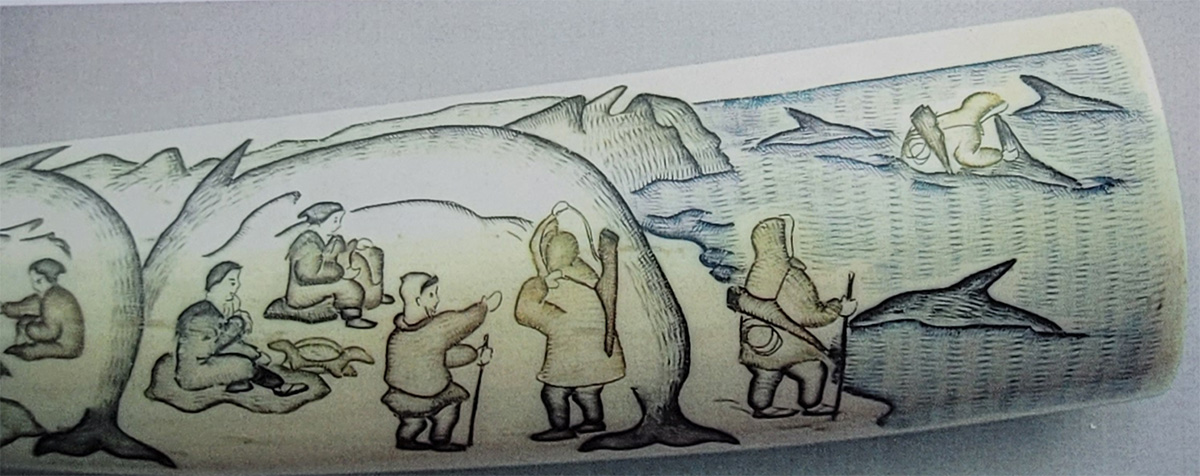
Fragment of the fang "Hunter and killer whales" - legend, 1986.
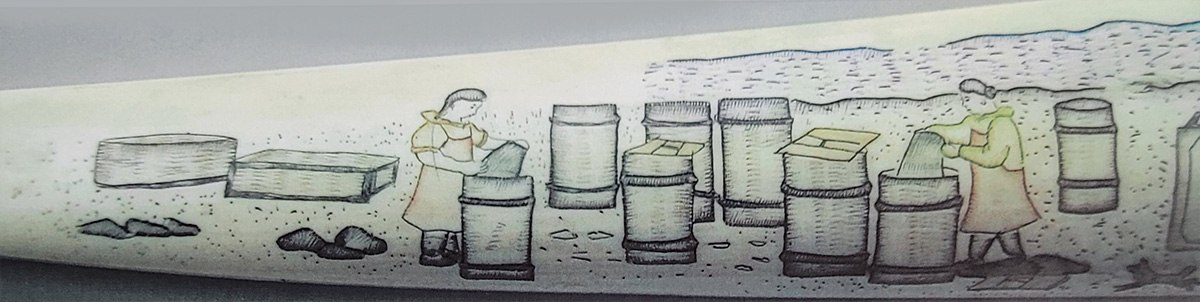
Fragment of a canine tooth "Extraction and harvesting of fat", 1970.
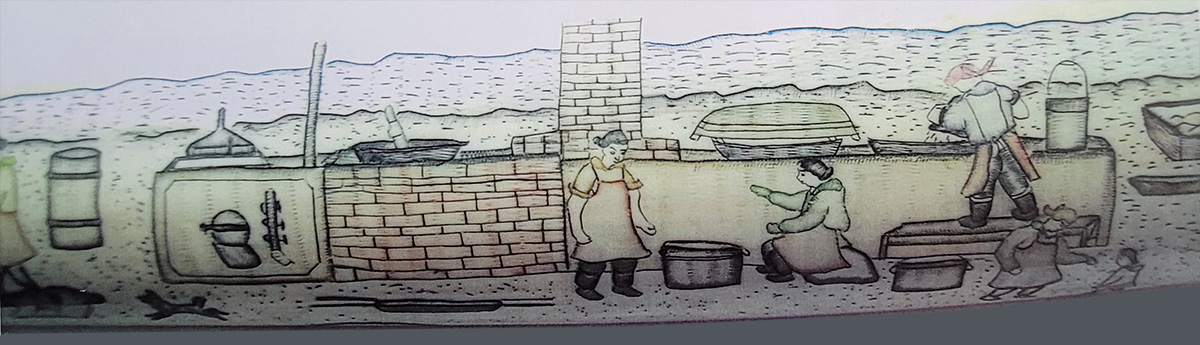
Continuation of the work "Extraction and preparation of fat", 1970.
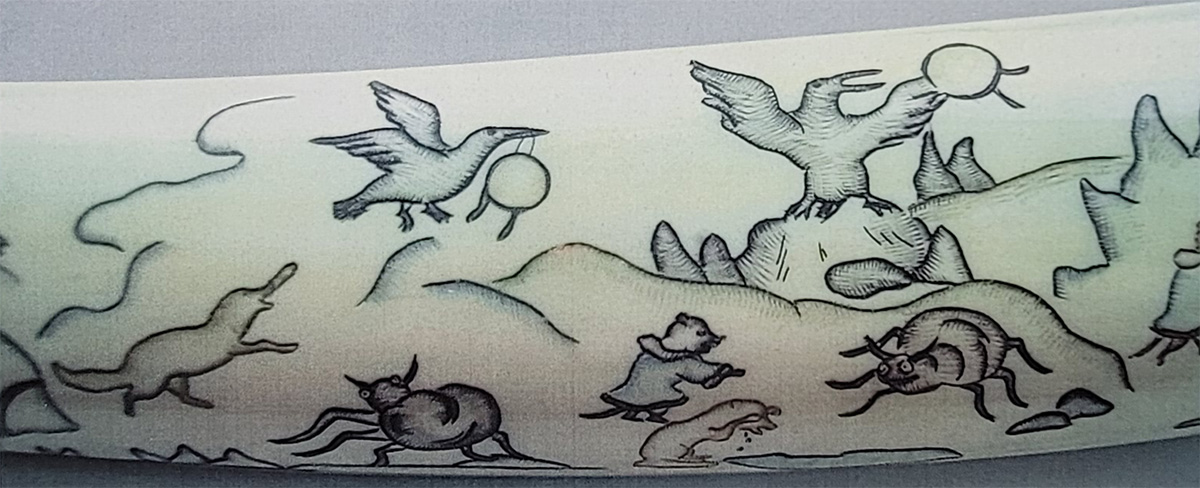
Fragment of the fang "The Lost Song" - a fairy tale, 1986.
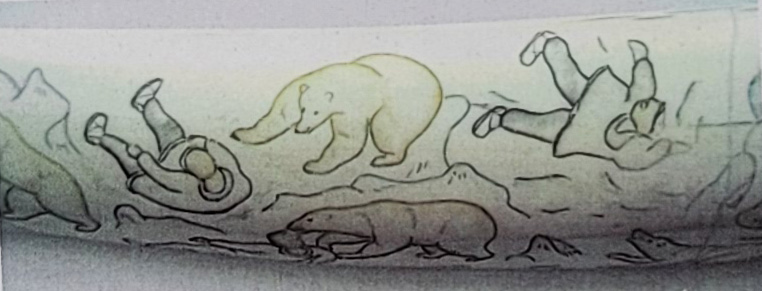
Fragment of the fang "The Magic Tambourine" - a fairy tale, 1986.
Department of Culture, Sports, Tourism and Information Policy of Chukotka Autonomous Okrug, Museum Center “Heritage of Chukotka". Anadyr 2008.
Музейный центр “Наследие Чукотки”. Анадырь 2008.
Читайте также из категории "Персоналии чукчей":
- Вуквол Михаил (26.11.2020)
- Leonid Frantsevich Grinevetsky (26.11.2020)
- Аренто Иван Петрович (26.11.2020)
- Рытхэу Юрий Сергеевич (26.11.2020)
Views: 1,790