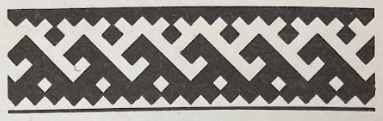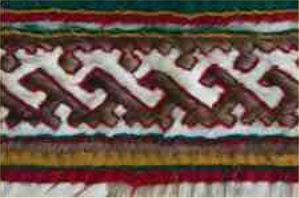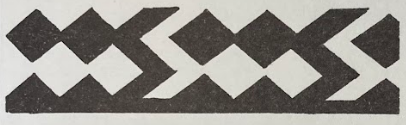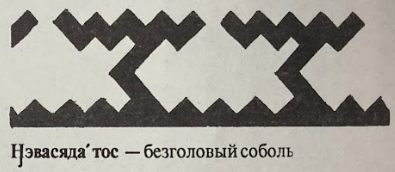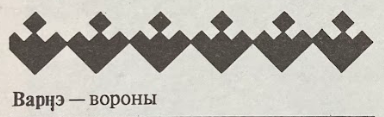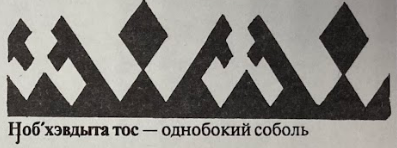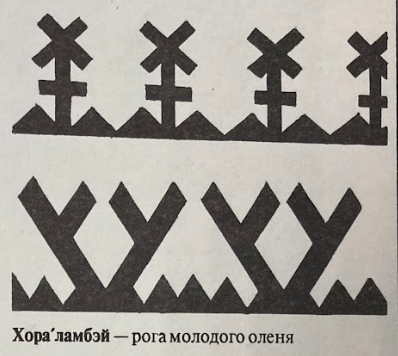


” Vark’ nya’ " (Варк’ ня’) – mouth of a bear is used only on a man's clothes. The bear is considered sacred to the Nenets, its image and fangs are protective. This ornament gives its owner fearlessness, strength and power.
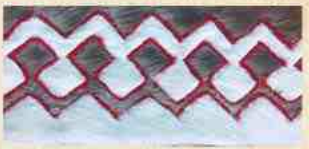
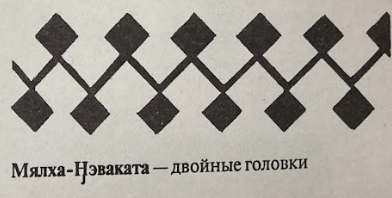
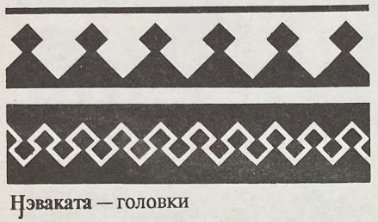
'Ngevakhata' (Ңэваката) – round dance, heads. It means strong bonds, pure thoughts, friendship, symbolizing the unity of people. The ornament is associated with a purification rite, which is conducted annually by a women – owners of chum and keepers of hearth. Therefore, women wear it on their clothes, and they are more often found in hats and bakaries (boots made of deerskin).
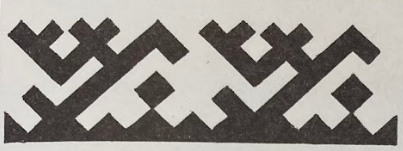
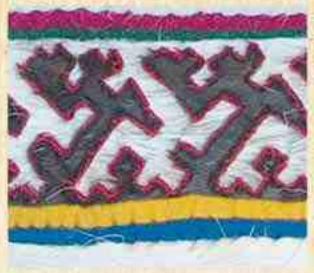
'Sanarta ty' (Санарта ты) - a jumping deerFor the northern nomad, the deer is the basis of his life, therefore, ornaments associated with it were widely used to decorate clothes and household items. Ornaments depicting deer antlers and heads are not used on shoes. “You can't trample on a deer's head, we're nothing without a deer,” is how the Nenets usually express themselves.
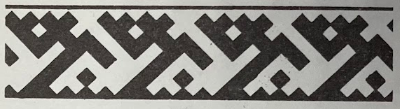
'Miadiko' (Мядико) - like a chum. For centuries, the chum, arguing with the onslaught of nature, stands in the tundra as a symbol of human will, wisdom and strength. This ornament is used to decorate clothes, men's and women's bakaries. It is often applied in addition to the main ornament.

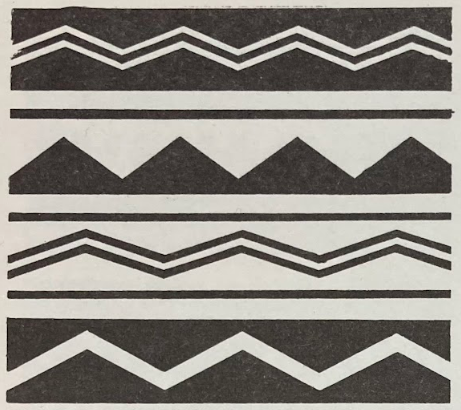
'Yadhaleda Nehru' (Ядхаледа неру) - a bent tree. According to Nenets vision, everything is alive in the tundra and the trees have a soul. Every tree and bush belongs to some kind of spirit world. Cedar and pine, for example, are trees of underground spirits. If the tree is bent, it means that it is talking to its owner.
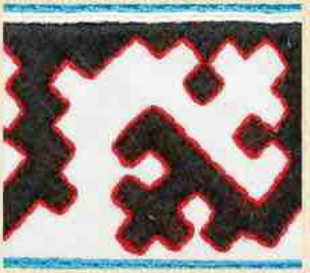
'Yango' (Яңго) - a trap. The ornament, symbolizing good luck, is used mainly to decorate men's belts, so that luck accompanies the fishermen in their production. Hunting is one of the main activities for the inhabitants of the tundra, and the Nenets have long been considered excellent hunters. The secrets of happy fishing were passed down from father to son. Fur-bearing animals were obtained using traps.
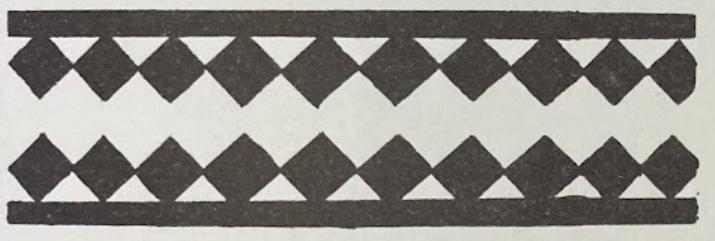
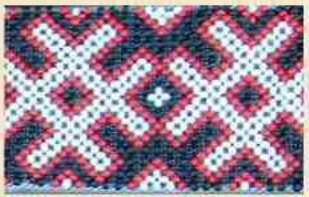
Tyonya’ salik (Тёня’ салик) –a fox's elbow. The fox is a symbol of dexterity, cunning and ingenuity. It is difficult to live in tundra conditions without such qualities. Therefore, the Nenets people treated this animal with great respect. Fox skins were presented as gifts to the family spirits and the main one of them – Yav malu (Яв малу). In ancient times, most Nenets families had a fox skin in their cult boxes and sacred sleds. The fox is also considered sacred because it hunts mice, and according to Nenets mythology, a mouse, being in the service of the god of the lower world Nga, could climb into a dwelling and take with it the souls of family members. This ornament is common among craftswomen and can often be found on women's clothing.

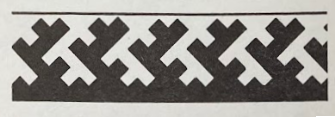

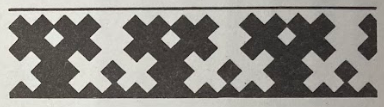
Vark’ yadma (Варк’ ядма) – the trail of a bear. Many Nenets clans have a bear as their totem animal. He protects the family from diseases, resolves disputes between family members. This symbol of strength and power is used not only on men's clothing, but also on household items. A craftswoman can only apply this ornament seven times in her life, otherwise it loses its magical meaning.
Sarmik’nya’ (Сармик’ ня’) – a wolf's mouth. It is used only on men's clothing, as the wolf is a sacred animal, the master of the deer herd. A wolf is a very intelligent animal, even if you chase it across the tundra, it is difficult for a hunter to catch up with it. He covers his tracks with his tail, disappearing into space. The wolf ornament, according to its creators, gives wit and clarity of mind to those who have it on their clothes.
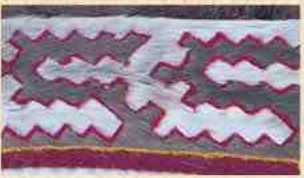
Khabarta (Хабарта) – a moose makes its way through the forest. Moose is a sacred animal for Nenets. The moose is considered the Mistress of the forest, it is not for nothing that they say that the Mistress of the forest has moose legs. The dogs were not given moose bones and meat. Women should not eat eyes, tongue. Only shoes for men are made from deerskin. This ornament is used for the decoration of festive clothes.
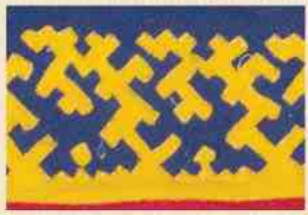
Lyarsa (Лярса) - a spider. The spider is a revered symbol. The web must not be destroyed, otherwise you will fail in hunting and fishing. If a red spider starts to spin its net on top of the chum, it means that the chum owner is waiting for a successful fishing trip.
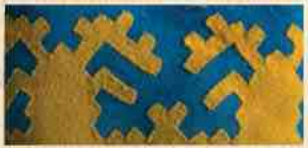
Pyung (Пюңг) - a dwarf birch tree. Dwarf birch, which grows in the tundra, is considered a symbol of resilience and strength, it does not bend under the winds and frosts. It is widely used to decorate both women's and men's clothing.
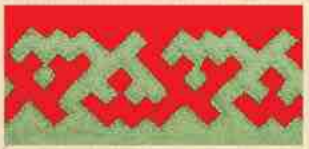
Taryakha (Таряха) - a squirrel. The ornament of the forest Nenets. According to Nenets mythology, the squirrel is an assistant to the spirit of the Mistress of the forest and symbolizes domesticity. The squirrel is called golden because of the red color of its skin. This simple ornament is widely used for the decoration of not only clothes, but also household items.
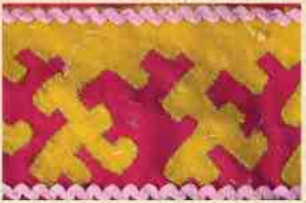
Tarka tavasi otake (Ңарка тэваси ңэ) – the paws of an adult hare. The ornament resembles the very strong and strong paws of a hare. The hare is not afraid of frost or cold. Using this ornament to decorate clothes, the craftswoman wished the owner to have a strong body so that he stood firmly on the ground.
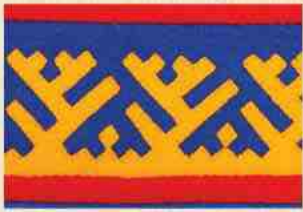
Nyawatana suyu (Няватана сую) – a running fawn. This ornament is used to decorate children's clothes, wishing the child to grow up nimble, strong, healthy, like a fawn. In spring, newly born calves can be observed in the tundra, which quickly strengthen their legs. As if rejoicing at this, the calves immediately start running and jumping.
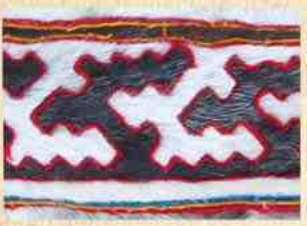
Ty’ sekhaery (Ты’ сехэры) – deer trail. When deer move through deep snow, in order not to fall through and save their strength, they step into the trail, forming narrow deer trails. This ornament is used on men's clothing. Using it to decorate her husband's clothes, the woman mentally wished that her husband's life would be smooth and calm.

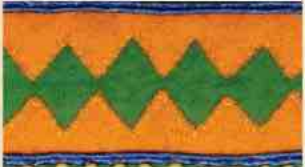
Ya’ horv’ tibya (Я’ хорв’ тибя) – mammoth tusks. The literal translation is “mammoth tooth". The Nenets called a mammoth “bull of the earth.” They believe that mammoths dug underground tunnels and, when they came to the surface (most often from the steep bank of the river), instantly died from sunlight. That's why protruding tusks are most often found on river banks. According to legend, the legendary underground people of Sikhirtya rode on mammoths. Sikhirtya means “burrowing holes” in Nenets. It is believed that a mammoth tusk is necessarily sticking out of the hill where they lived.
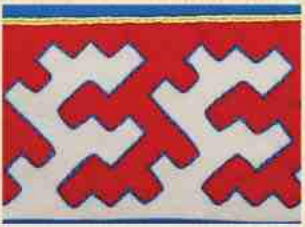
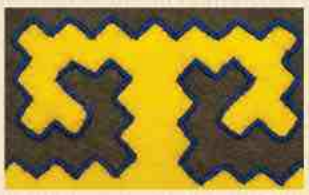
Hala’ tenabts' (Халя’ тёнабць’) – hangers for drying fish. In the summer, the housewives dried fish and made yukola. Hangers for drying fish were made up of female chorea and extra poles for the chum. The fish was dried in the sun for three days, then brought into the tank for smoking. This ornament is used to decorate men's and women's clothing. The ornament depicts hangers full of fish. His presence on the clothes is a wish to the hostess of a full life, good luck in fishing and hunting.
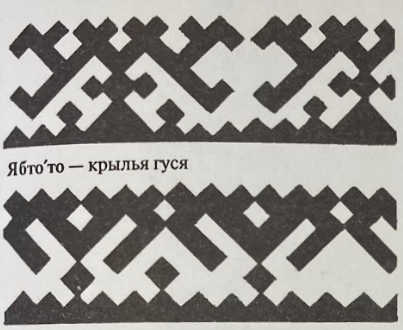
Halev' toh (Халэв’ то) – wings of a seagull. It is believed that the seagull is a bird of the spirit that controls clouds and thunderstorms. The Nenets have signs associated with seagulls: if the seagulls excitedly start flying over the coast, it means it's going to rain. And if the seagulls circled over the cast seine, it means that you can expect a rich catch of fish.
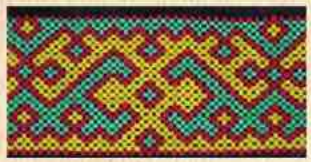
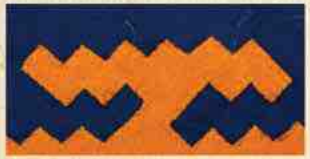
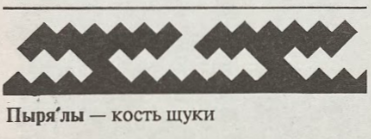
Pyrya ly (Пыря лы) – a pike bone. Pike, according to beliefs of the Nenets, is considered a fish of the Spirit of water. The owner of the water has a pike's back. The pike is a shaman's assistant when communicating with the spirits of the water. There is an assumption that therefore it is a sin for a woman to carve this fish. In some cases, even a man can't cut her spine. The bones from the pike's head are not given to the dogs, but thrown into the fire. The Nenets have a genus of Perirakha, which means “like a pike.” Apparently, this ornament is related to the genus, in which the pike is a totemic fish. This ornament plays the role of a talisman.
Tirthya yabto, tirtha limbya (Тиртя ябто, тиртя лимбя) – a soaring goose, a soaring eagle. An eagle is a bird of the upper spirits, with its help the shaman could communicate with the spirits of the upper world. Appearance of the sun on the horizon was compared to an eagle sitting on a hill. The appearance of a new sun meant the beginning of a new year. It is believed that the ornament protects against evil spirits.
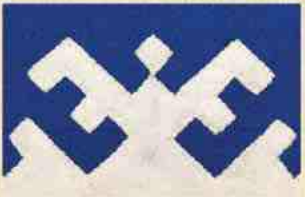
Hora’ tarawa (Хора’ тарава) – a bull wedding dance. Male deer always flaunt in front of their she-deer during the rut. They fight each other to the death. There were such cases that their horns could get entangled with each other, and both male deers died in an equal battle. She-deer, for whom the deers were fighting, was waiting for her winner and went with him to the tundra. This ornament depicts a victorious male deer, a symbol of masculinity. Wanting to be a winner in life for her son, brother or husband, a woman sewed this ornament on a man's clothes. In women's clothing, it is used in combination with feminine ornaments to attract happiness in family life.
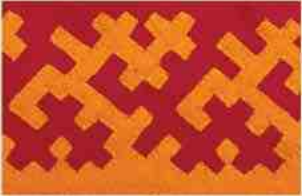
Khabarta’ nyamd (Хабарта’ нямд) – moose horns. The ornament depicting beautiful, unusual horns of an elk was used on the clothes of men and boys. A moose is an animal of the Forest Mistress. Moose horns were used to make amulets with special power. An ornament depicting moose horns also has the meaning of a talisman, endows a person with strength, fortitude and wisdom.
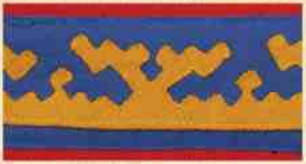
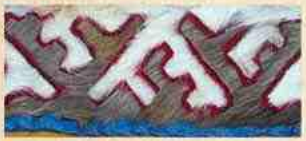
Habt’ nyamd (Хабт’ ням) – horns of a castrate. The most revered domestic deer with branched horns belonged to the supreme deities, family spirits. The ornament is used to decorate clothes and household items.
For a long time, wishing to increase the herd of their deer, they used a pattern in the shape of deer horns. It was believed that this image helps with the mass death of deer from terrible diseases such as anthrax, plague, scurvy, etc. [4]
Khalyakhad panta yort' (Халяхад панта ёрть') – a seine full of fish. Fishing is a traditional occupation for the Nenets. Fish were caught in a variety of ways. The sedentary Nenets, who did not have their own deer, were mainly engaged in fishing. It was they who used this ornament to decorate their clothes. A seine full of fish is a symbol of good luck and prosperity.
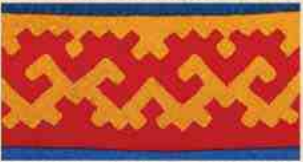


Tavasi’ лha (Тэваси’ ха) – rabbit ears. Small ornaments were traditionally used for the clothes of young children. The rabbit ears ornament is considered a symbol of maternal care, bringing peace to the child. For a child under 1 year old, the cradle in which he slept was a talisman. The cradle was decorated with beads, metal ornaments with protective symbols and bells. A claw of a totemic animal was placed under the pillow.
Ngarka eya mya” (Ңарка ея мя”) – a big chum. This patterned image of a chum is used to decorate festive clothes, more often women's, since the world of Nenets woman is a chum. It is a symbol of life, strength and durability.

Nokho’ lembara (Нохо’ лэмбара) – a breast bone of an arctic fox. In the worldview of the Nenets, an Arctic fox is an animal that requires a respectful, even reverent attitude. It is often referred to as a sacred animal. If Arctic fox skin was given to someone, then the tip of the nose was cut off from the fur and kept for themselves. It was necessary so as not to lose luck. This ornament is often used for the decoration of women's bakaries and untaykas (high fur boots).
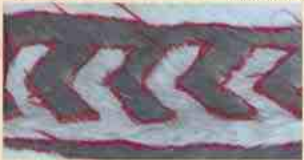
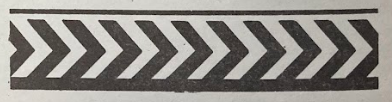
Paedara yerv ne (Пэдара ерв не) - the Mistress of forest. Tundra inhabitants have always treated nature with reverence and care, and the same attitude was towards the Mistress of forest. In the Nenets view, the Mistress is a beautiful woman with long hair who has moose legs. She is the protector of the forest and its inhabitants, she has many helpers among the animals. In the image of the ornament, she seems to be dancing her ritual dance. The ornament is used to decorate outerwear.
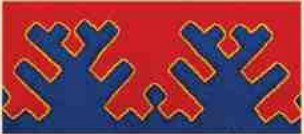
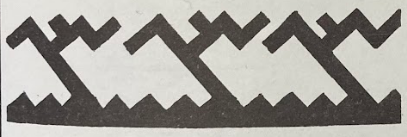
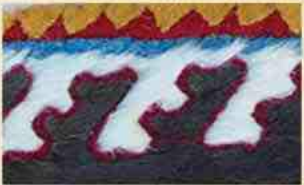
Nenetsya havdyar (Ненэця хэвдяр) – a side of a man. Discreet ornaments are used to decorate children's clothes. Nenets people believe that it is forbidden to decorate children's clothes too richly, otherwise it may attract the attention of evil spirits who can harm the child.
Vada” (Вада”) – a hook. In the tundra, food is cooked over a campfire. A special hook called a “tuvada” is used to hang a kettle or cauldron over a fire. This simple household tool is also reflected in the ornaments. This ornament is used to decorate clothes so that there is always prosperity in the house.
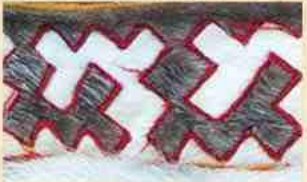
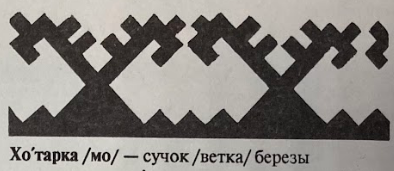
Ho’ mal (Хо’ мал) – birch branches. Being careful of nature, a tundra inhabitant revered trees at the same time, and birch is considered sacred in the tundra. This is due to the fact that birch was the most generous and useful tree. It provides material for covering summer chums, making household utensils, and useful juice for drinking. The white color of its bark is associated with purity, light and a good beginning.
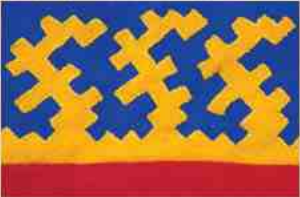
Kharp (Харп)– northern lights. According to legends of the Nenets, northern lights are a breath of the god Num. When the northern lights appear in the sky, it means that God has approached the earth and is watching everything that is happening. Children were forbidden to play with the northern lights or to cause them to shimmer by shouting or whistling loudly. They said, 'Anger the Num'.
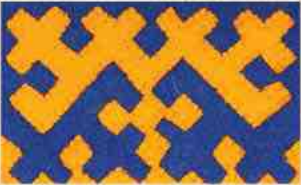
Nyavatana vaeneko (Няватана вэнеко) – a running dog. One of the legends says: once upon a time, the supreme god Num gave everyone a separate farm. A man and a dog lived separately. The dog quickly destroyed his supplies, eating both the contents of the cargo sled and the deer in a short time, not caring about the future. Then Num got angry and said, 'You don't know how to live on your own at all, go to a man and live with him. Sit on a leash and eat what the man gives you.' Num pulled a hair out of his head and threw it at the dog. The dog became covered with fur and was speechless. Since then, she has been barking into the void of the night when she sees the inhabitants of the underworld.