


ESKIMO LANGUAGE
Natalia Petrovna Radunovich author of textbooks and manuals on the Eskimo language, teacher of the Eskimo language
State Autonomous Professional Educational Institution “Chukotka Multidisciplinary College”,
interpreter, founder of the Chukotka public organization "Inuit Circumpolar Council".
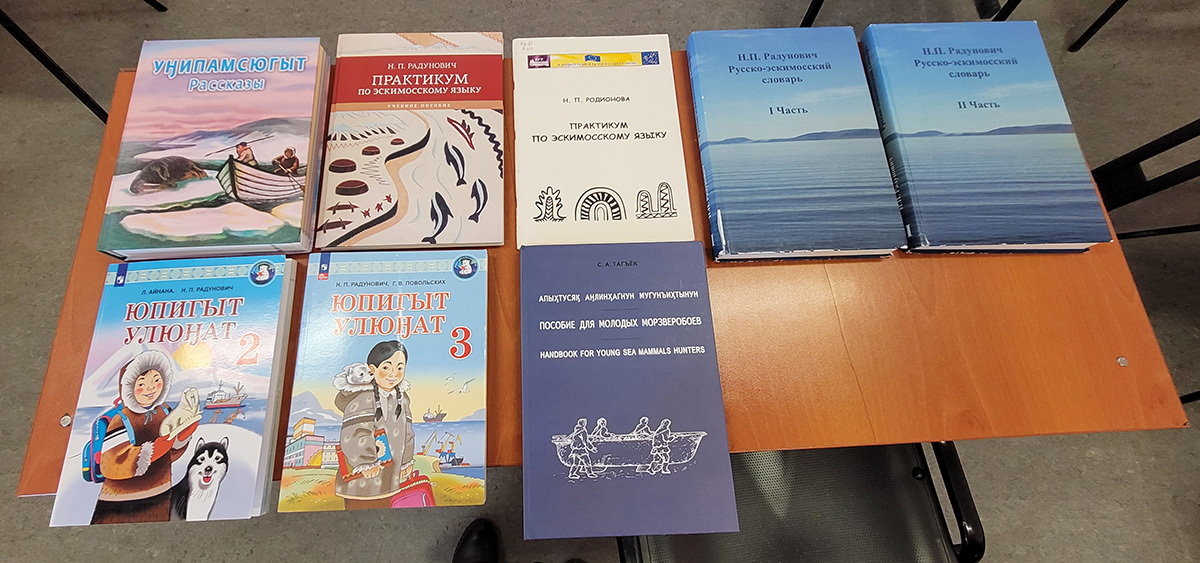

Eskimos speak the languages of the Eskimo branch of the Eskimo-Aleut family; the Eskimo language is widespread on the southeastern coast of the Chukotka Peninsula (Chukotka Autonomous Okrug, Russia), on the Alaska Peninsula with adjacent islands (USA), in the Arctic zone of Canada, Greenland (Denmark).
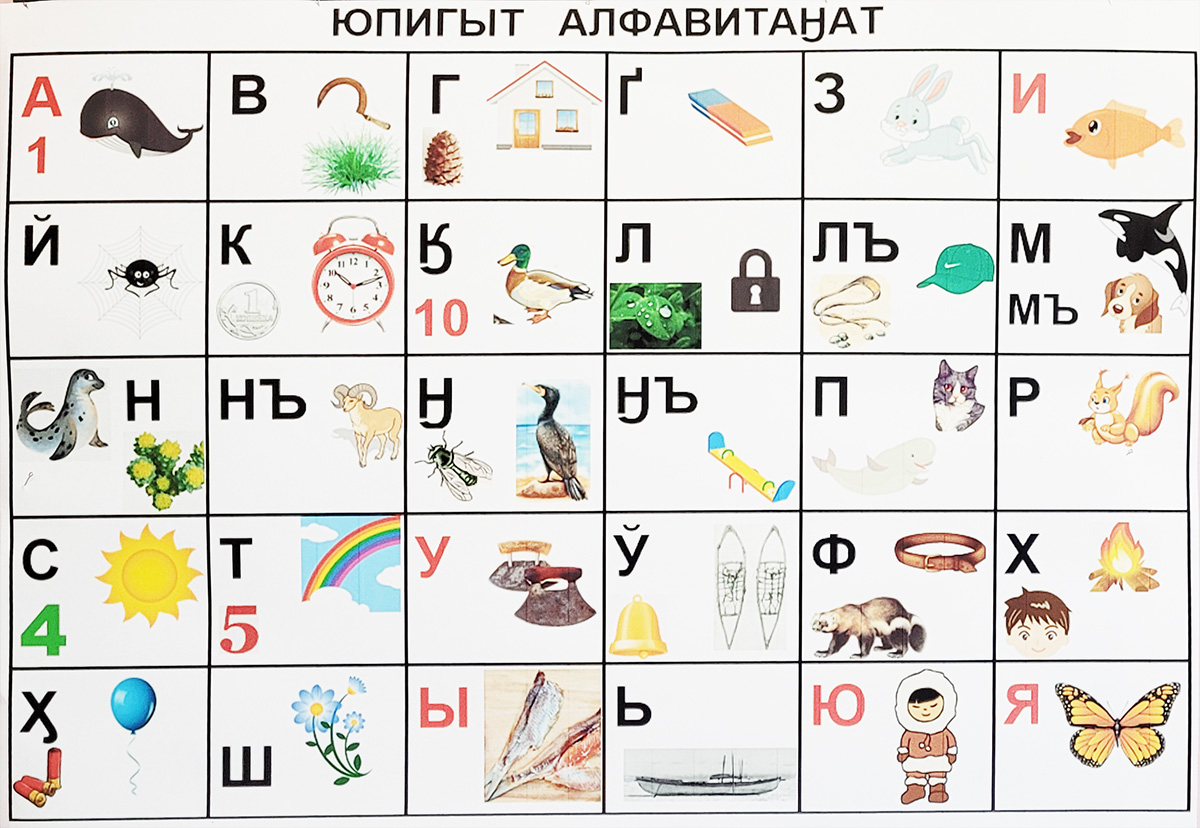
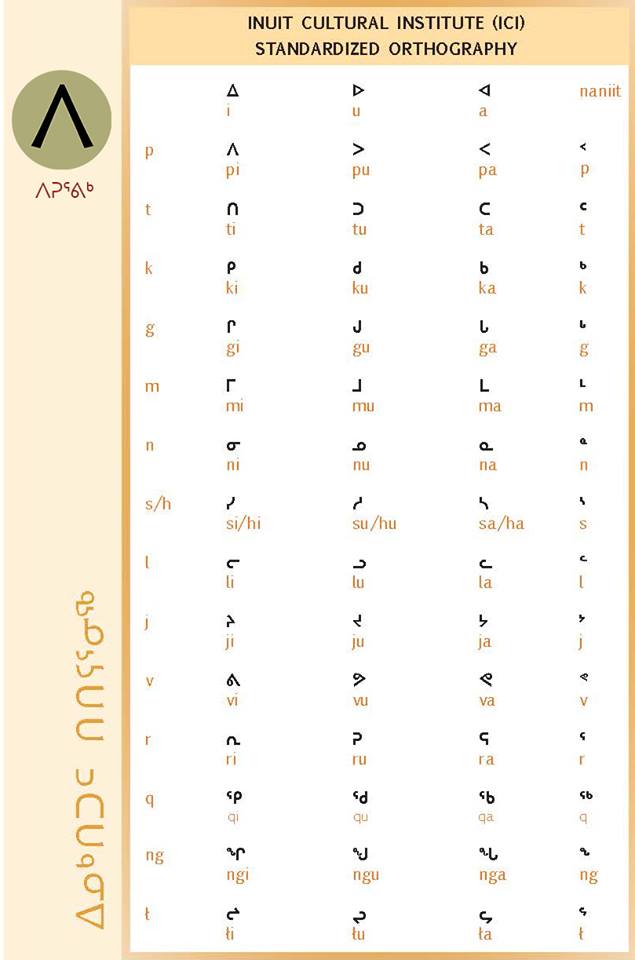
In 1848, the Russian missionary N. Tyzhnov published a primer of the Eskimo language. In 1932, a modern script was created on the basis of Latin script and the first Yuit alphabet was published. In 1937, the Yupik script was transferred to the Russian script.
There are three distinct languages in the Eskimo language:- Chaplin (underlying written language),
- Naukan,
- Sirenian (extinct).
Speakers of the Chaplin dialect of the Eskimo language (according to another classification of the Chaplin language) live in Russia in the settlements of Novoye Chaplino, Sireniki, Provideniya, Uelkal, and the city of Anadyr (Chukotka AO). Here they number about 900 people (according to N.B. Vakhtin). In the USA, in the Gambel and Savoonga settlements on St. Lawrence Island, there are about 1300 Chaplin Eskimos (Dorais 1992, 237-255), according to Russian sources there are about 1100 Chaplin Eskimos in the USA.
Speakers of the Naukan dialect of the Eskimo language (according to another classification, the Naukan language) live in Russia in the settlements of Lorino, Lavrentiya, Uelen and Provideniya (Chukotka Autonomous Okrug). The total number of Naukan language speakers is about 400-500 people, the native language is spoken by about 100-200 people (according to the 1989 census).
Speakers of the dialect of Sirenik Eskimos (according to another classification, the Old Sirenik language) inhabited the eastern coast of Chukotka in the early 20th century. At that time their number was not more than 100 people. In 1992, there were only two speakers of the Sireniki Eskimo language, representatives of the older generation living in the village of Sireniki (Chukotka Autonomous Okrug, Russia). In 1997, the last speaker of the Sireniki language died (according to the data, the Sireniki language is widespread on the southeastern coast of the Chukotka Peninsula, mainly on the territory of the Providensky District of the Chukotka Autonomous Okrug. The same language is spoken on St. Lawrence Island (Alaska) in Savoonga and Gambell settlements.
In the 1920s, several Eskimo families were resettled in the settlement of Uelkal (Iultinsky District, Chukotka Autonomous Okrug); their descendants still live there today. In the late 1950s, as a result of the policy of consolidation, many settlements were liquidated and their inhabitants resettled. Thus, the settlements of Unazik, Avan, Ureliki, Kivak, etc. were relocated to Novoye Chaplino settlement, and the settlement of Imtuk - to Sireniki settlement. Sireniki is the only one that remained in its original place. (Source: https://minlang.iling-ran.ru/lang/)
A fairy tale in the Eskimo language
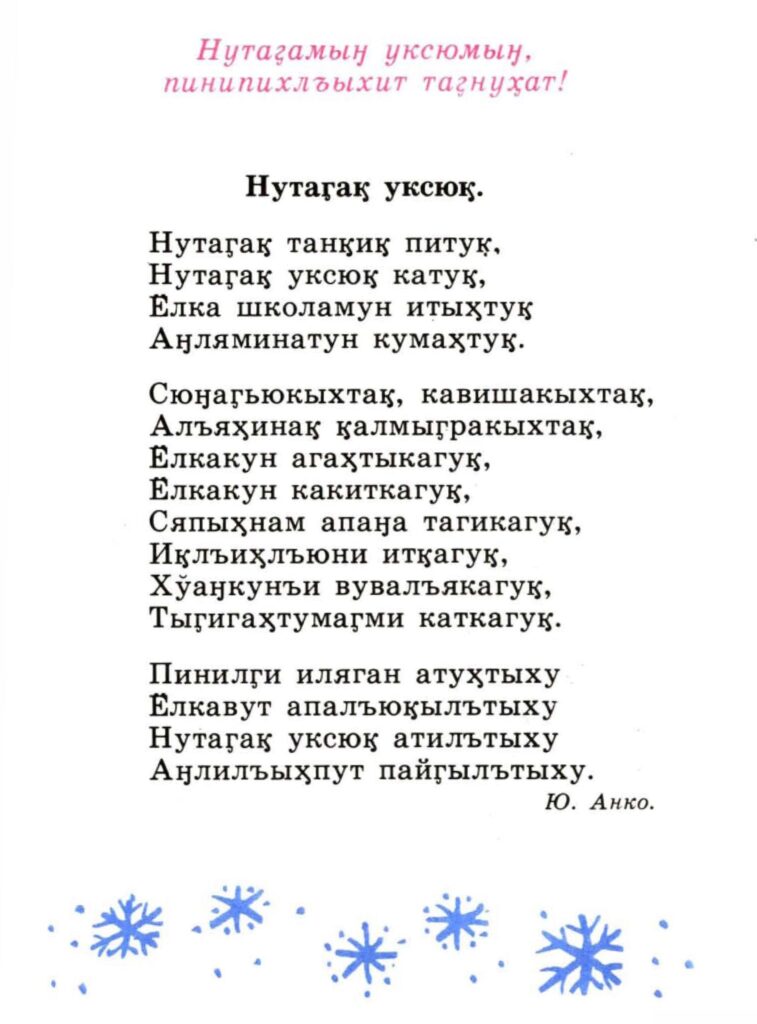
Аҕнаҕаӽаӄ-ԓю мытыӽԓюк-ԓю Аҕнаҕаӽаӄ ысниӽӄўатамалюку, мытыӽԓюгым ысӽаҕлюку: – Аҕнай, аҕнай, ки-и нулиӄыкилякын?! – Ки-и, нулиӄыкиӈа! – Атуюҕийин? – Атуюӈа! – Уӄихсин? – Уӄихтуӈа! – Ки-и, ата! Мытыӽԓюк атуҕьялҕими сивукԓюни: – Ӄа-ӄа-ӄа-ӄа-ӈаӄ, ӄа-ӄа-а-ӈаӄ! Аҕнаҕаӽам авылҕаӄинамакаӈа. – Атуйитутын! Нулиӄыкинанҕитамкын! Амын-ам тагавык пиялҕи. Аҕнаҕаӽам иляӈа-ԓю ысӽаҕа. Ысӽаҕлюку: – Аҕнай, аҕнай, ки-и нулиӄыкилякын?! – Ки-и, нулиӄыкиӈа! – Атуюҕийин? – Атуюӈа! – Уӄихсин? – Уӄихтуӈа! – Ки-и, ата! Атуҕуӄа: – Ӄа-ӄа-ӄа-ӄа-ӈаӄ, ӄа-ӄа-а-ӈаӄ! – Атуютын. Нулиӄыкиԓыӄамкын! – Атуюӈа! Нулиӄыкинаӄывӈа. – А-а, агляԓта! Агляӽтук. Лыган итыӽтук. Сикигым амираӈыԓта кыфтаӽтуҕа. – Ысӽа такут амит сянаӽсяӽӄаӽтын! Аҕнаҕаӽам сянаӽӄуҕьяӄынъи – сянаӽӄуҕьяӄынъи, ӄамахти. – Ки-и, сюкатыпихсин! Иўын-ԓю ӄамахтаӄук. Тфай! Ӄамахтуӄ!
The Raven and the Girl.
A long time ago, they say. A girl was collecting seaweed on the seashore. A raven saw her and said: “Woman, woman, oh-oh, be my wife!
- Oh, I'll be your wife!
- Can you sing?
- I can sing.
- Are you beautiful?
- Yes, I am.
- Come on, sing!
The raven sang first: - Kar-kar-kar-aa-ngak, kar-kar-kaaa-nga!
The girl remained silent, not singing.
- You can't sing, so you won't be my wife.
The raven went away. The girl met another raven. The other raven saw her and said:
- Woman, woman, oh-oh, be my wife!
- Oh, I'll be your wife!
- Can you sing?
- I can sing.
- Are you beautiful?
- Yes, I am.
- Come on, sing!
The raven sang first:- Kar-kar-kar-aa-ngak, kar-kar-kaaa-nga!
The girl repeated after him.
- You can sing, you'll be my wife!
- I can sing, I'll be your wife!
- Yeah, let's go!
Let's go to the raven's house. The raven pelts are laid out.
- Dress those pelts!
The girl dressed and dressed and finally finished.
- Oh, you're quick! Then they stayed together. That's it. It's over!
An animated film based on the prologue to Pushkin's poem “Ruslan and Lyudmila” in the Eskimo language, translated by N.P. Radunovich. The text is read by Natalia Radunovich.
Читайте также из категории "Новости":
- Ген Арктики. Якутия (23.10.2026)
- Игры предков «Тэйкэв»: память тундры и сила традиций (15.09.2026)
- Из рода Нгамтусуо (08.09.2026)
- Культура нганасан представлена на Всероссийском фестивале «Напевы северного ветра» (08.09.2026)
- Тайны шаманского рода Воронов (26.08.2026)