

Eynes Lilia Ivanovna
a bone-cutting artist, Chukotka Autonomous Okrug, Anadyr


Leather and fur processing is one of the oldest crafts of the indigenous population of Chukotka. Chukchi women still skillfully use leather and fur for sewing and decorating clothes, shoes, for making wall mats, all kinds of bags, jewelry and many other items. Making leather goods and decorating them is a laborious job that requires artistic taste and high skill, as well as deep knowledge.
The main material for the manufacture of leather and fur products was and still is the skins of reinreindeer and marine animals (seal, walrus). Craftswomen of Chukotka were able to perfectly process various types of hides, taking into account the peculiarities of their structure, density, elasticity. They painted the treated leather with an infusion of alder bark, sometimes used mineral dyes, smoked the skin over the fire, which not only gave them a beautiful shade, but also enhanced their waterproof properties.
Special tools and equipment were used for processing leather and fur and decorating things made of them: cutting boards, boards for softening and dressing hides, scrapers (stone and metal), furrier's knives, needles of various sizes (including two-sided and three-sided), thimbles (bone and metal).
Ways to decorate leather products were diverse. They depended on the purpose of the subject and the characteristics of the material. Carefully decorated with clothing and items associated with the holidays. Finishing materials used in the artistic design of products were animal skins with beautiful fluffy fur (foxes, wolverines, dogs), reindeer hair under the neck, tendon threads made from the back and leg veins of reindeer, beads (porcelain and glass).
Among the artistic methods of clothing decoration is embroidery with reindeer hair. The Chukchi used tufts of white reindeer hair for this purpose. The bundle was fastened to the base with stitches of thread. In this case, various types of false seams were used (“simple suture", “flagellum", “zigzag"). Combining the seams, the craftsmen made straight and curved ornaments of different textures, imitated the play of light and shadow.
One of the unique methods of decorating the products of Northern craftswomen is fur mosaic. It is a combination of contrasting color pieces of fur, which are cut in the form of stripes, rhombuses, triangles, circles and other shapes. Mosaics decorated clothes, shoes, hats, bags.
A common decoration technique is applique, which is the superposition of one material on another. Three types of applications were practiced: skin on skin, fur on skin, and leather on fur. Application details in the form of various geometric shapes were usually cut from a white mandarin (sealskin with the hair removed).
Another type of decoration is holding the straps through the slots in the leather. The slots were located at the same distance from each other, and the strap threaded through them, contrasting in color with the main material, formed an ornament of evenly repeating miniature rectangles.
Embossed decorative stitching was usually used in the manufacture of shoes. Such a seam, connecting the upper part of the fur torbasa (soft boots made of reindeer skins) with the sole, was both a method of fastening and a form of decoration. Beaded jewelry is often a pendant attached to a kitchenette. Beads decorate the hems of kitchens, shoes, hats, belts, all kinds of pendants, handbags, wallets.
In recent decades, leather painting has spread among the peoples of the Far North-East. Its authors are often famous bone engravers. Using some techniques of walrus tusk engraving in leather painting, craftsmen develop them in relation to new techniques and new materials. Ornamental panels are usually decorated with painting on leather.
Currently, in every Chukotka village there are craftswomen who are excellent at the techniques of artistic processing of leather and fur. The names of many craftswomen are known far beyond Chukotka. The products of the best craftswomen of Chukotka are works of high art. They are exhibited in museums, at all-Russian and international exhibitions. The traditions associated with this type of artistic craft continue to live on. In many schools of the Chukotka Autonomous Okrug, classes are held on sewing traditional clothes, making all kinds of items from beads, fur, and leather. In the artistic processing of hard materials, bone processing has reached the greatest perfection (for more details see: p. 686-716).
The Chukchi bone-carving art received the highest recognition in the 1970s, when the masters I. Seigutegin, G. Tynatval and V. Emkul were awarded the State Prize of the Russian SFSR named after I.E. Repin (1976), and Tukkay, E. Yanku, V. Emkul and I. Seigutegin received the honorary title of Honored Artist of the Russian SFSR.
In recent years, the art of engraving on walrus tusk and sculptural carving has paid more attention to the national way of life of the Chukchi, reflecting its ethnographic features.
There is a successful search for decorative techniques in solving plot compositions. And the art of engraving itself has grown immeasurably, drawing has become more accurate and expressive (Bronstein, Shirokov, 2008; Tishkov, 2008).
E. P. Batyanova, I. S. Vdovin, S. F. Karabanova, N. V. Kocheshkov, V. A. Lytkin, V. A. Turaev
(from the book “Peoples of the North-East of Siberia”)
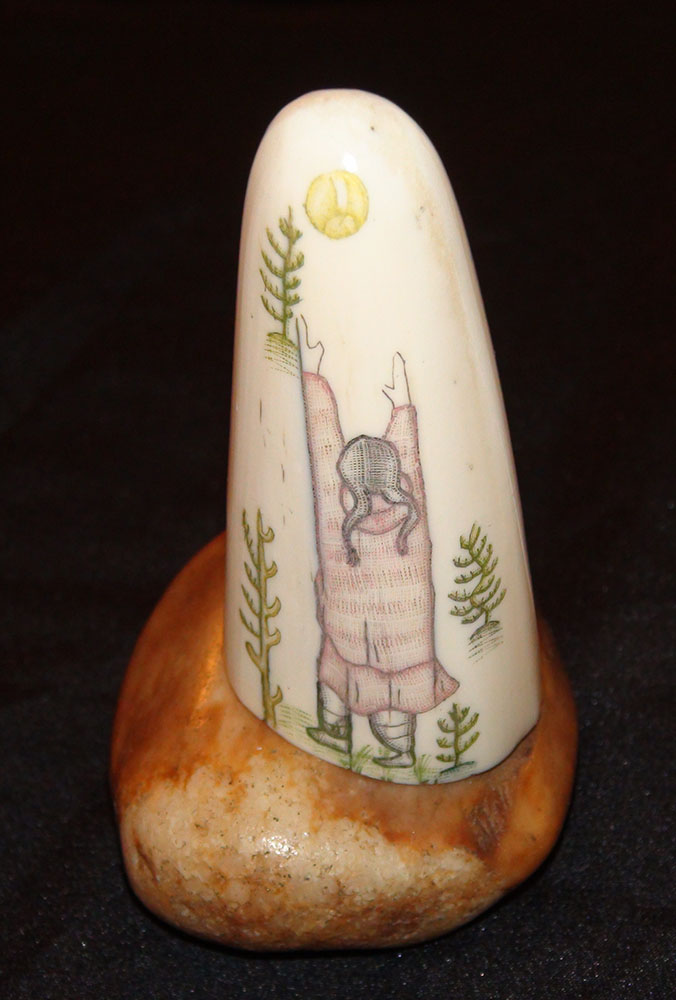
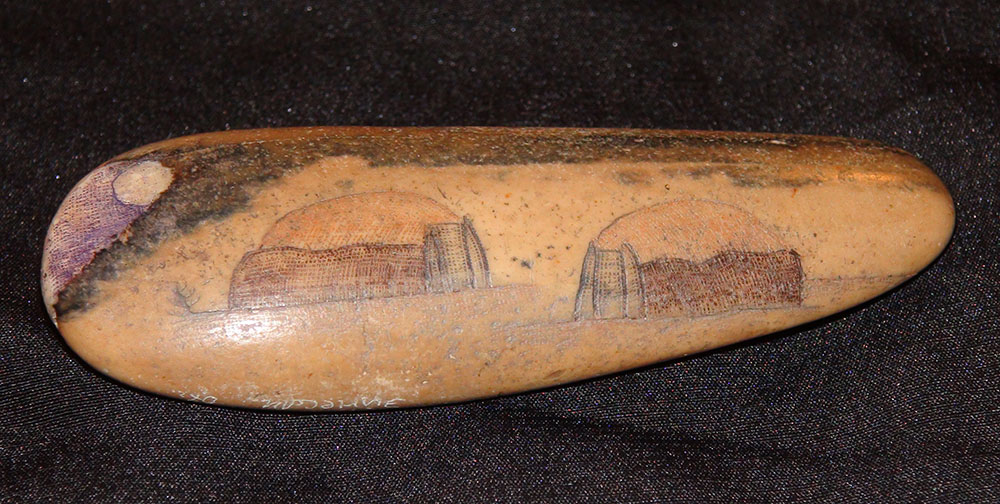
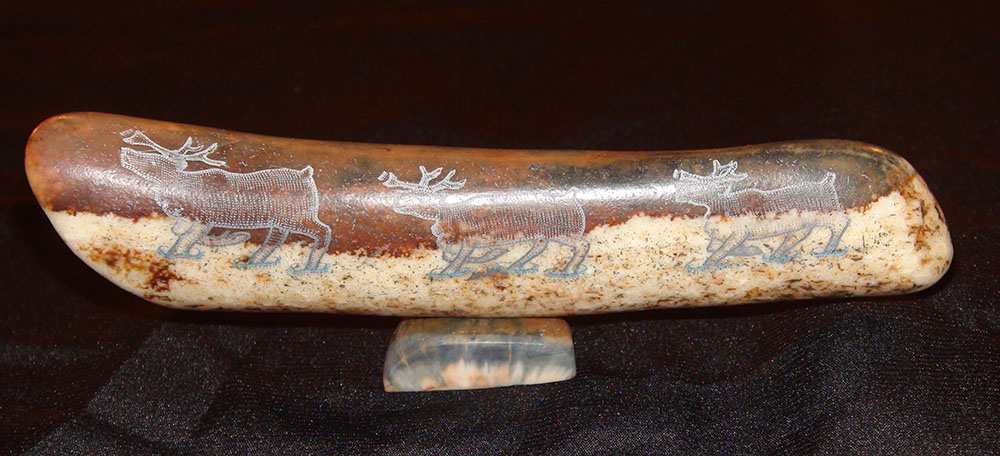
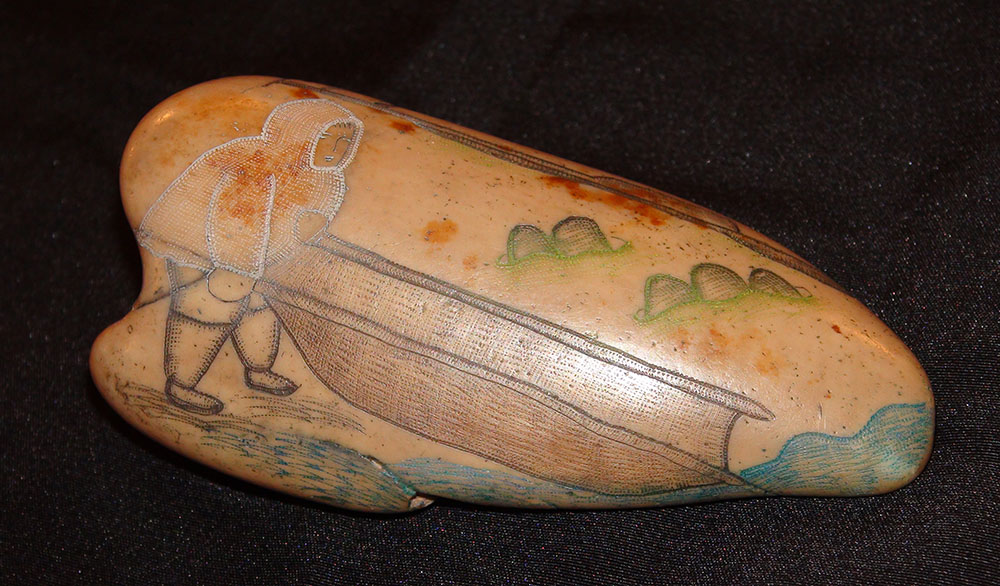
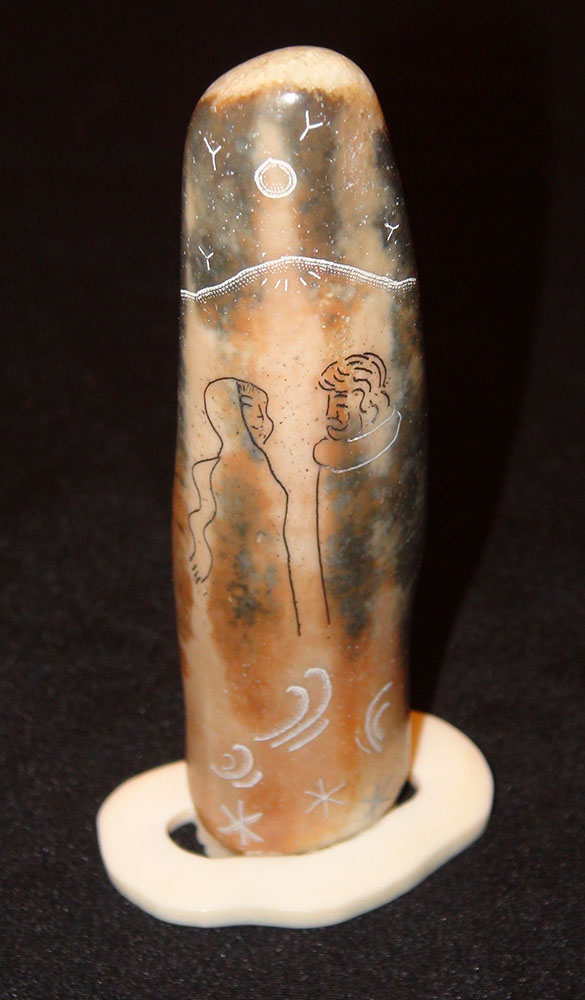
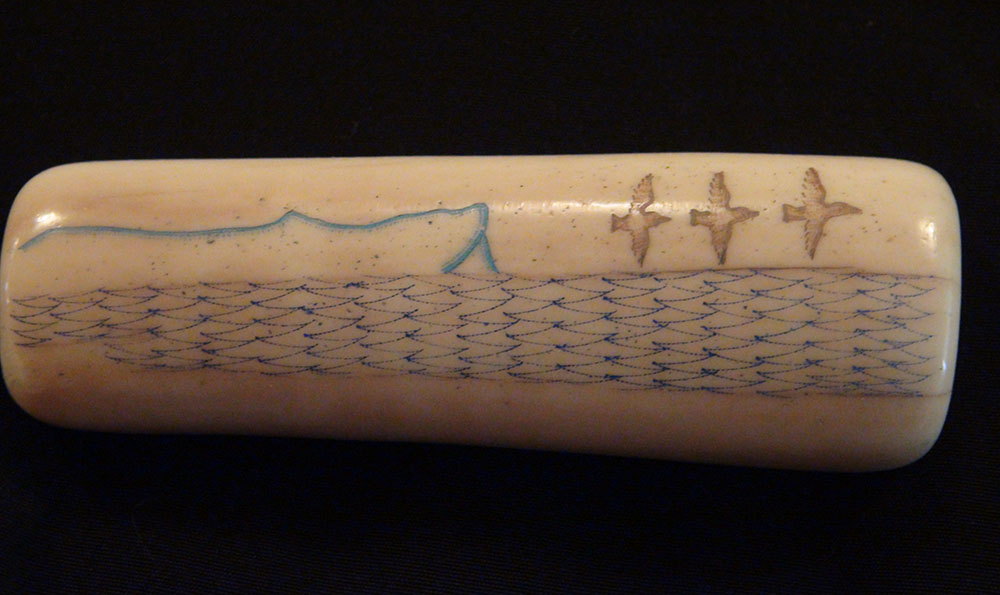
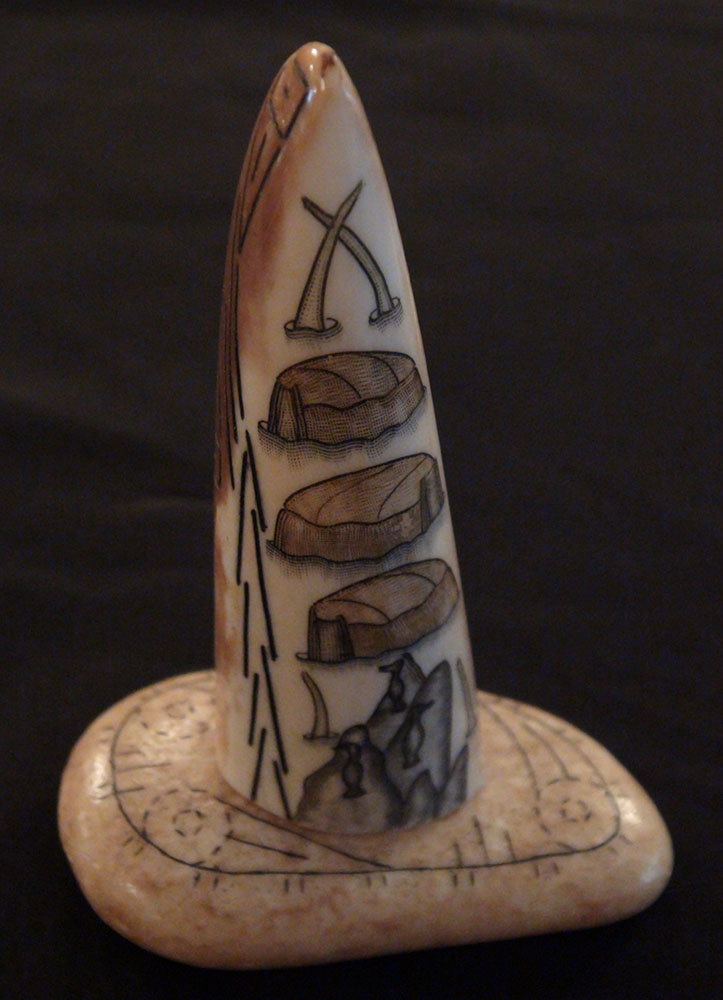
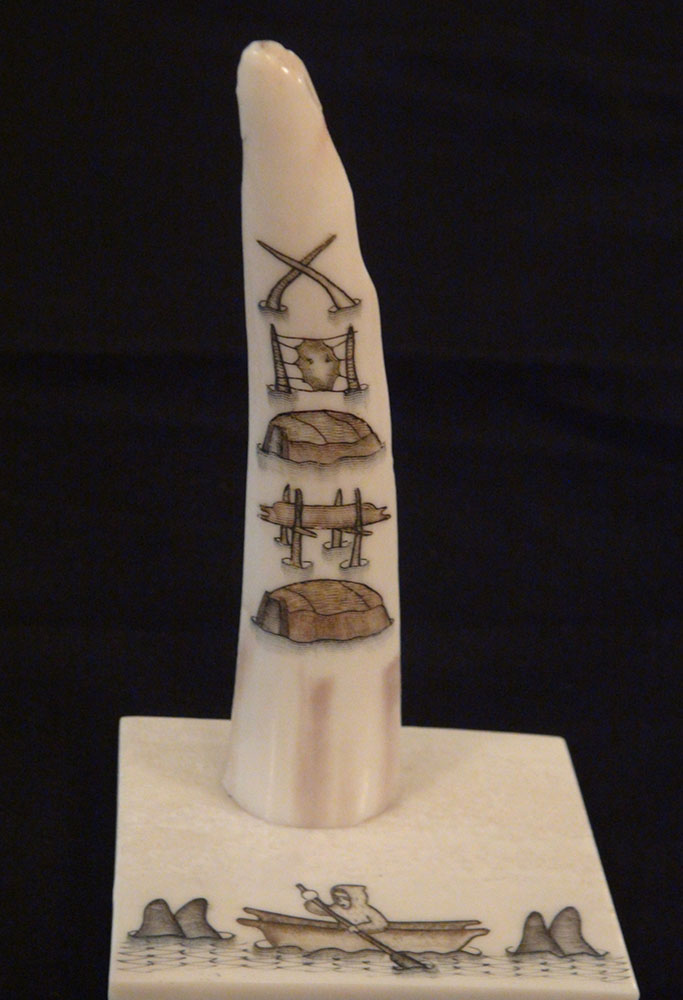
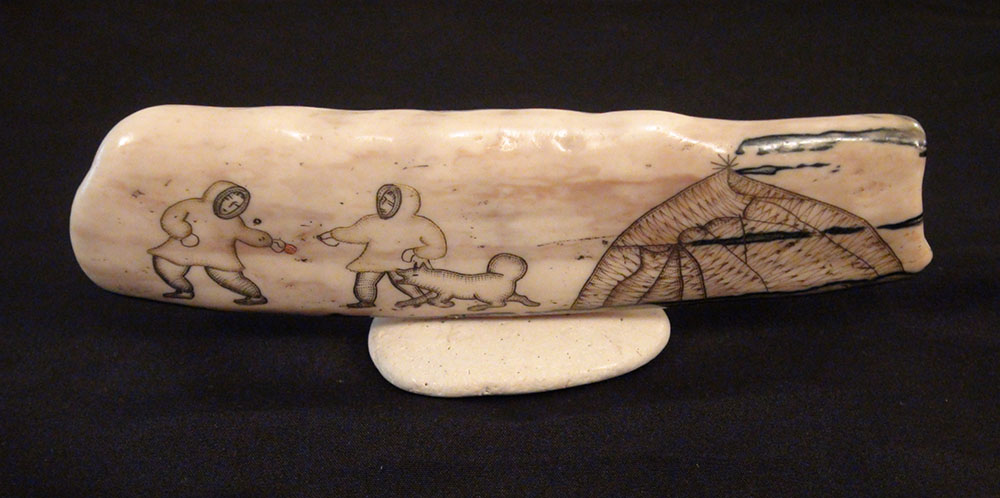
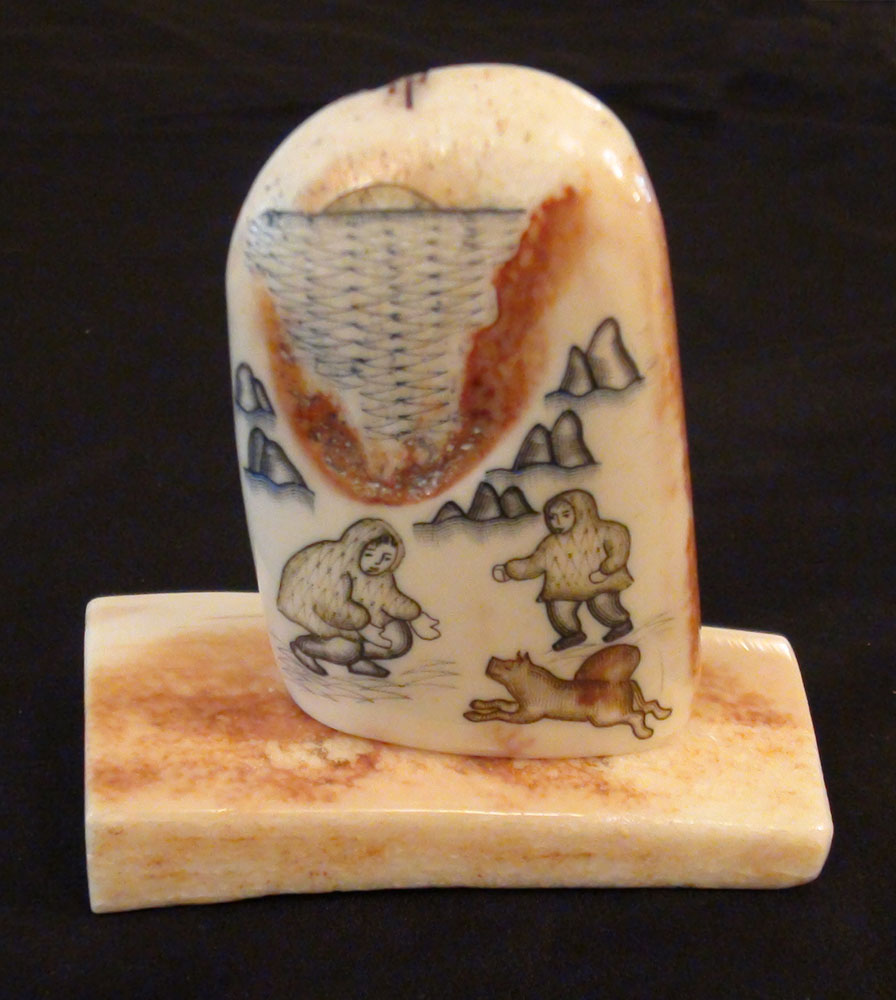
The works of the bone carver Lilia Ivanovna Eynes
(Chukotka Autonomous Okrug, Anadyr):

Читайте также из категории "Декоративно-прикладное искусство":
- Clothing (10.12.2020)
- Fine arts (08.12.2020)
- Traditional clothing of the Orok people (07.12.2020)
- Декоративно-прикладное искусство нивхов (06.12.2020)
- Прикладное искусство телеутов (06.12.2020)